Non-Delivery Report (NDR)
To configure the NDR, go to Microsoft’s redesigned Purview Admin Center to access Data Life Cycle Management undeliverable reports.
Note: If you are prompted to set up Microsoft Purview, click Get Started, and then once the page loads, click Exchange (legacy)
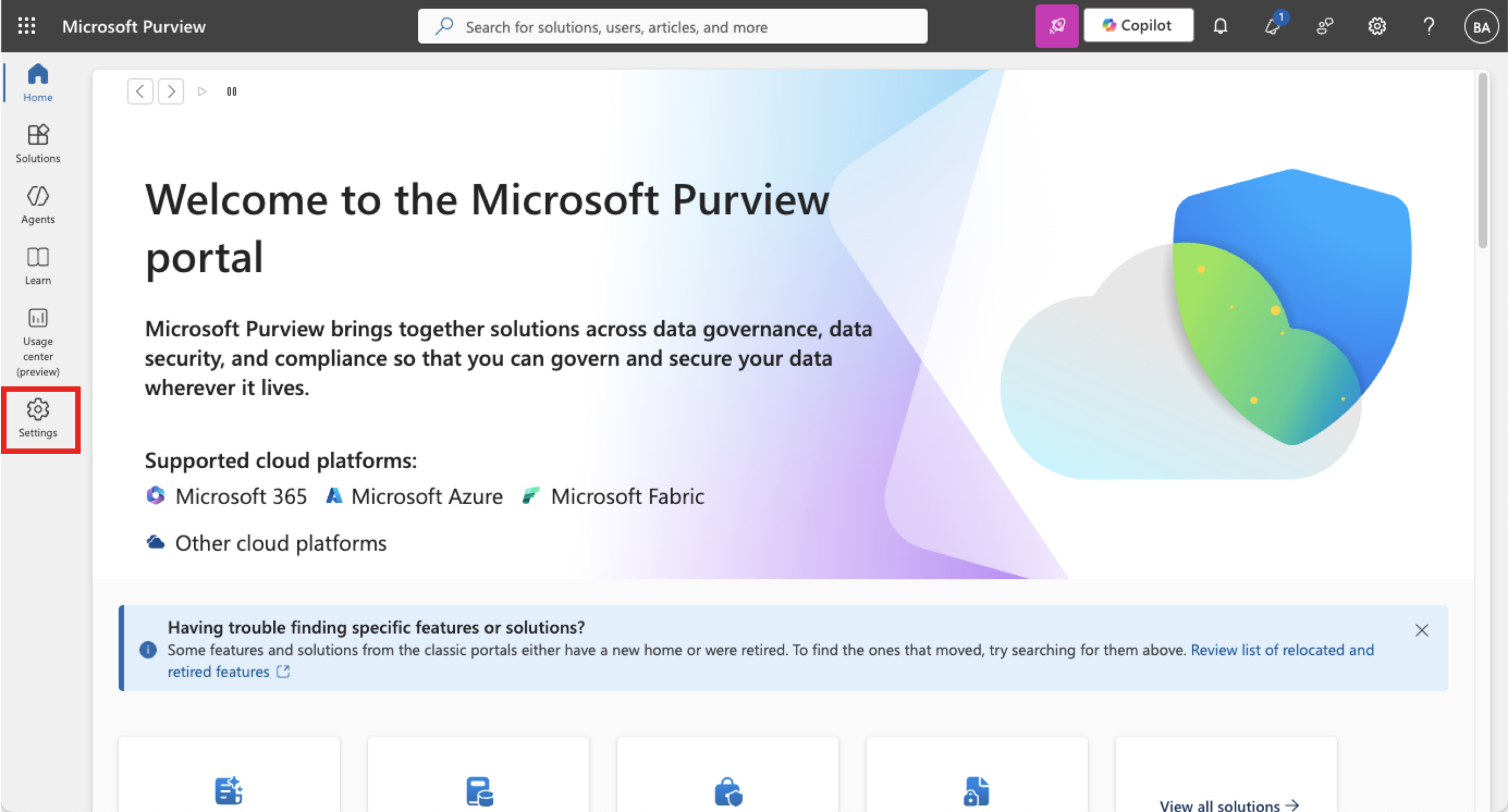
Go to Purview Admin Center – https://purview.microsoft.com/ and select Settings on the left
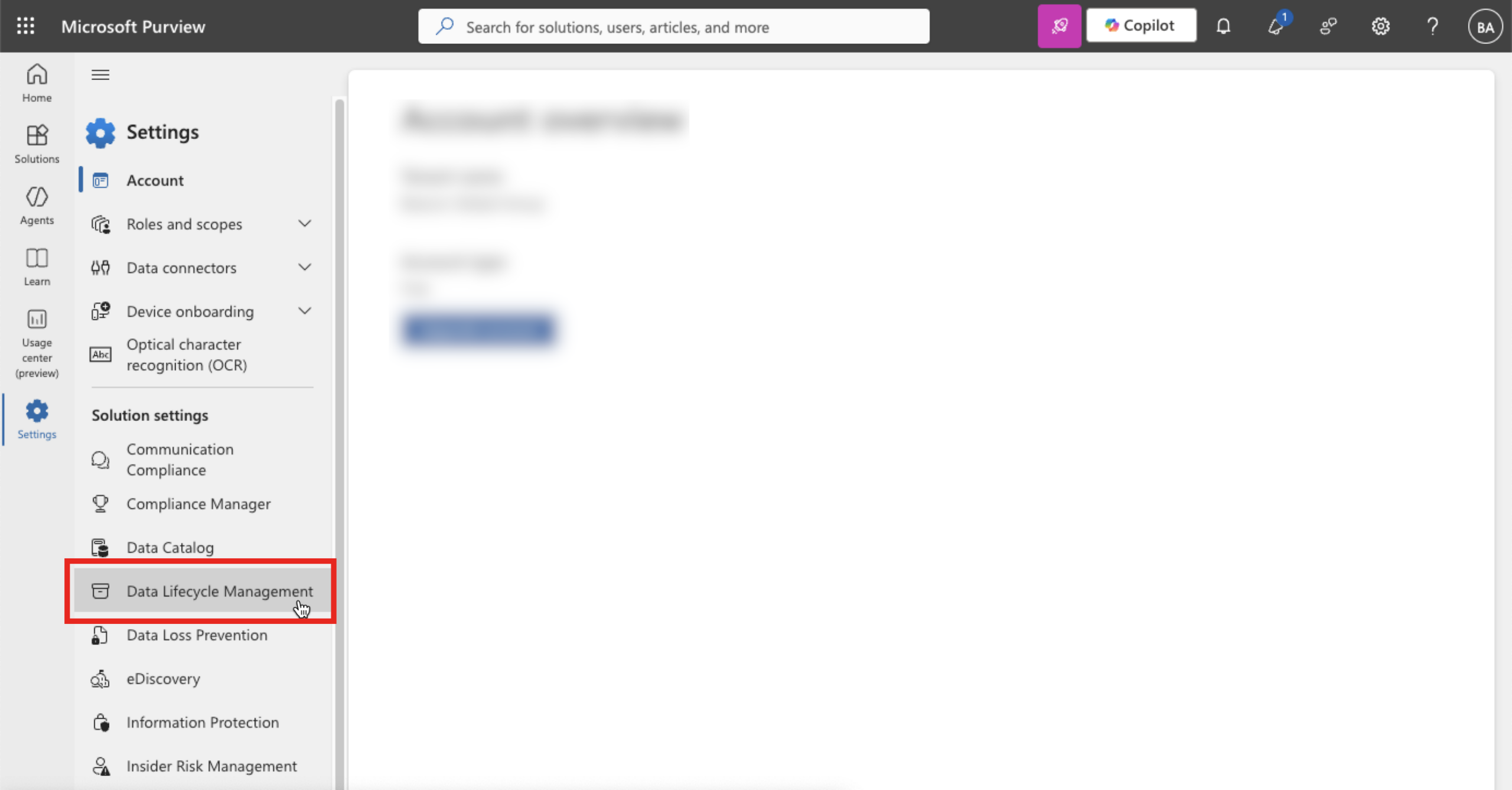
Click Data Lifecycle Management under Solution settings
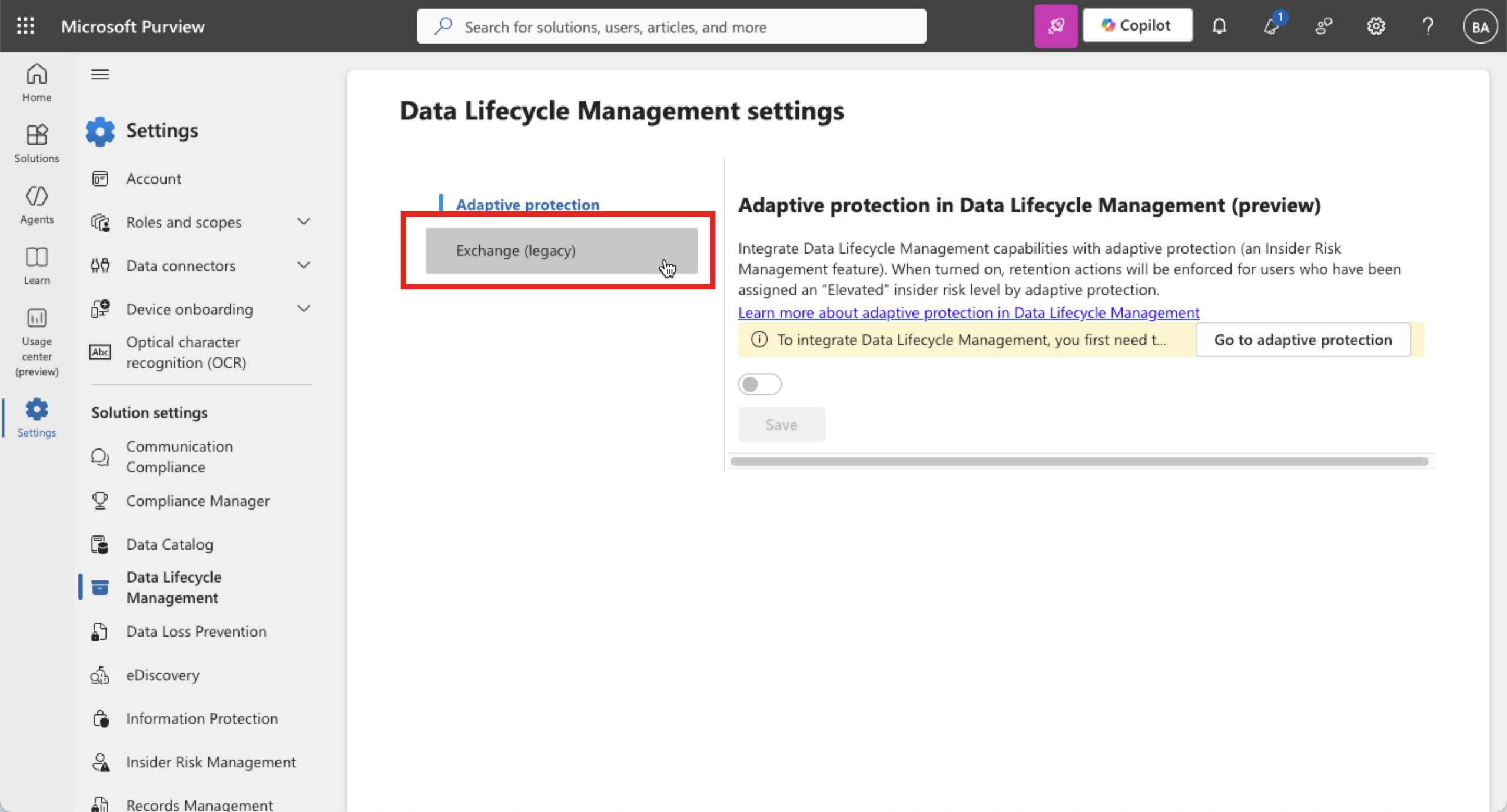
Click Exchange (legacy)
In the Undeliverable Reports section, enter an email address to receive the NDR reports and click Save.
Note: *This email MUST be EXTERNAL and unaffiliated with Microsoft. We suggest creating a free Gmail account with domainNDR@gmail.com where the domain is your domain name.

Creating Journaling Rule
Using the menu on the left, click Solutions
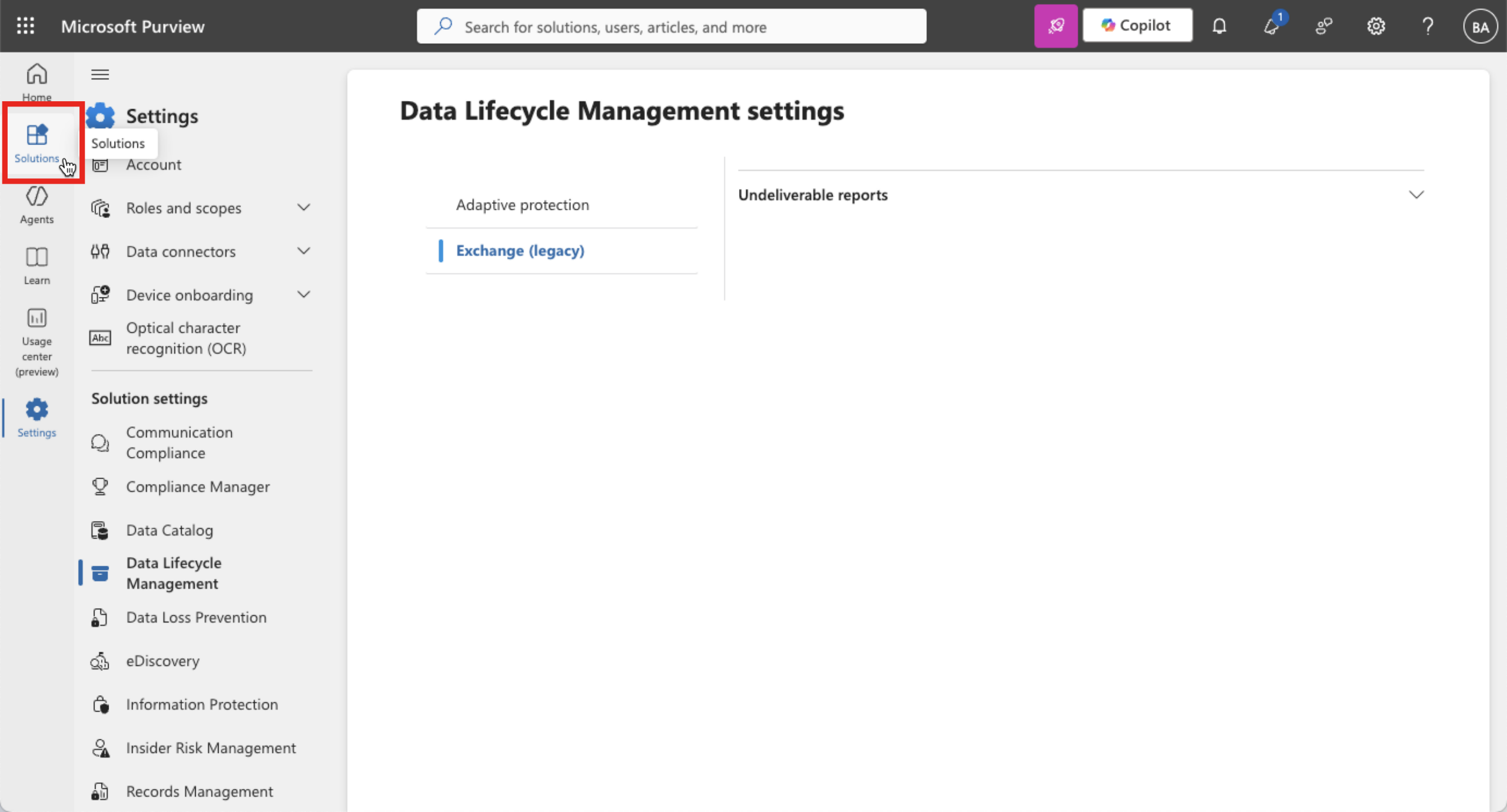
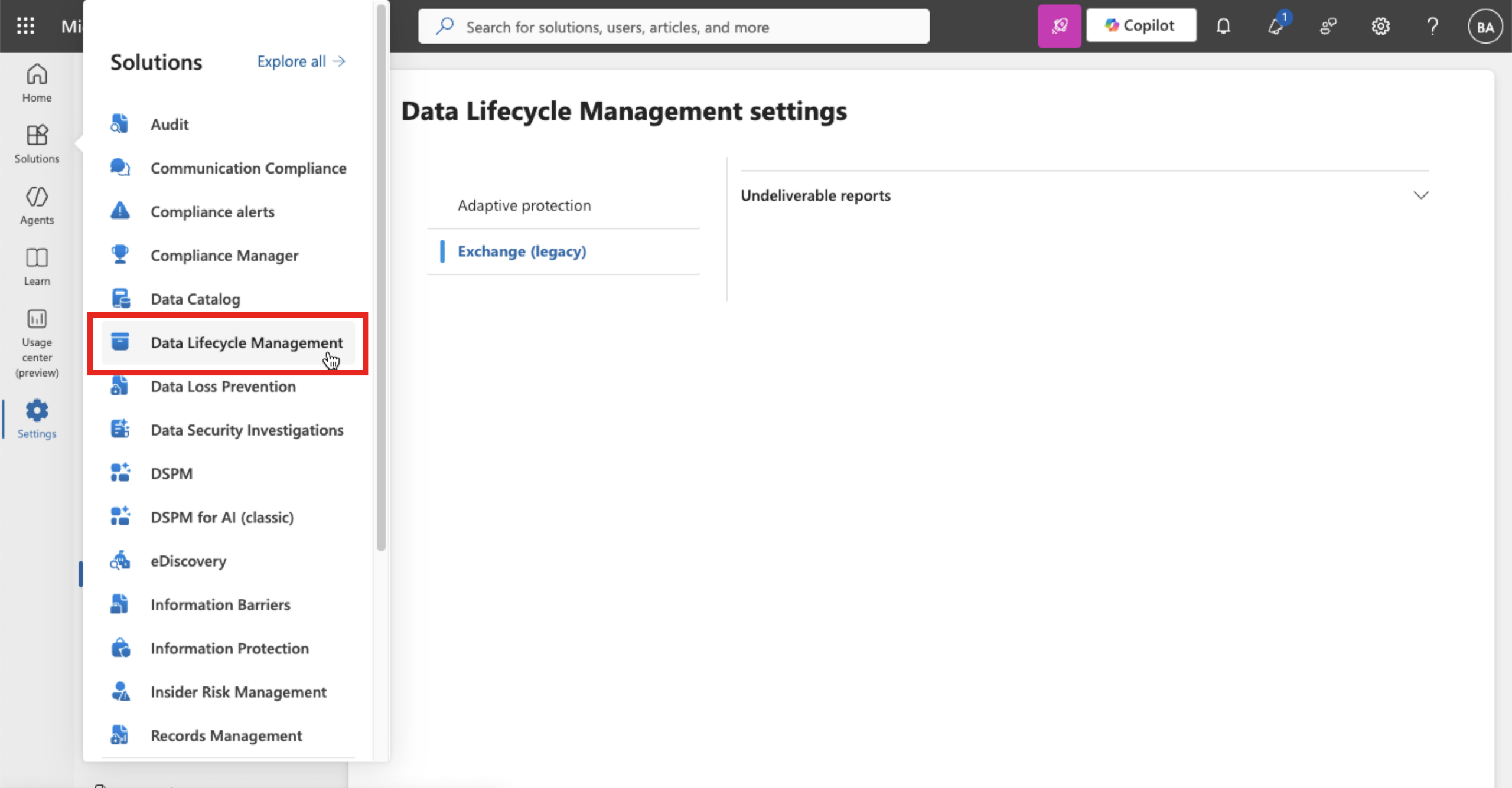
Click Data Lifecycle Management
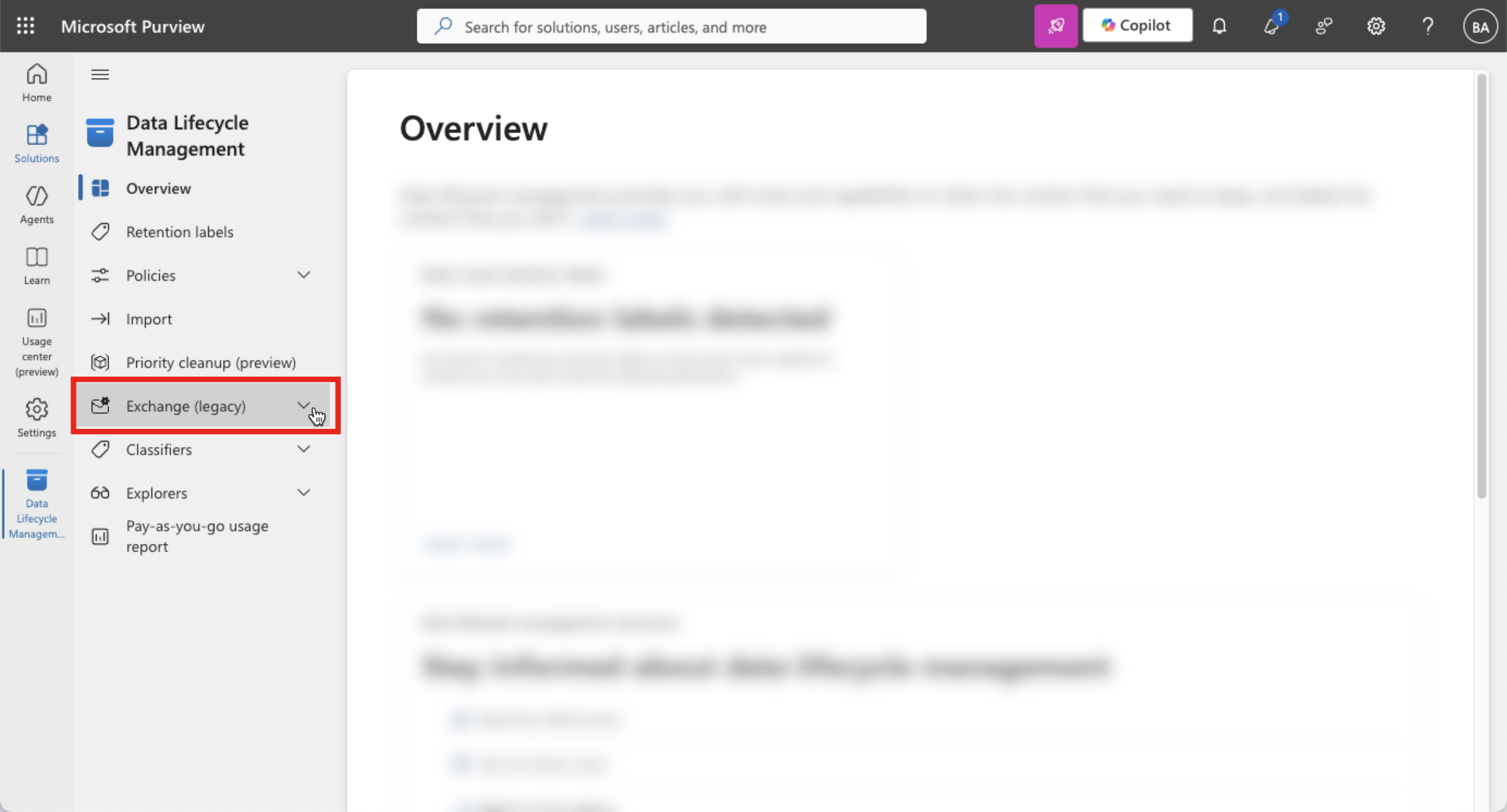
Click Exchange (legacy)
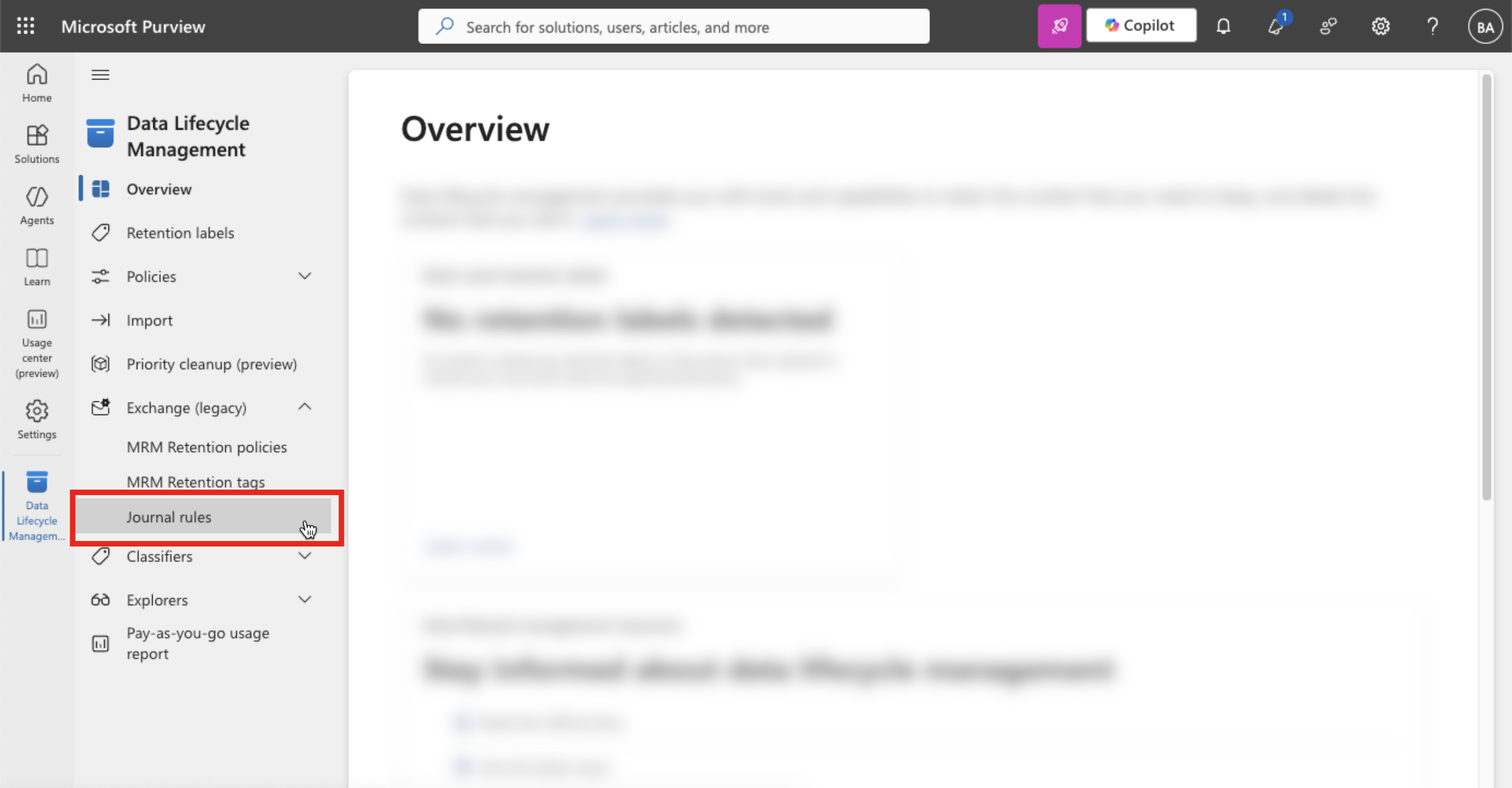
Click Journal Rules
Click + New rule
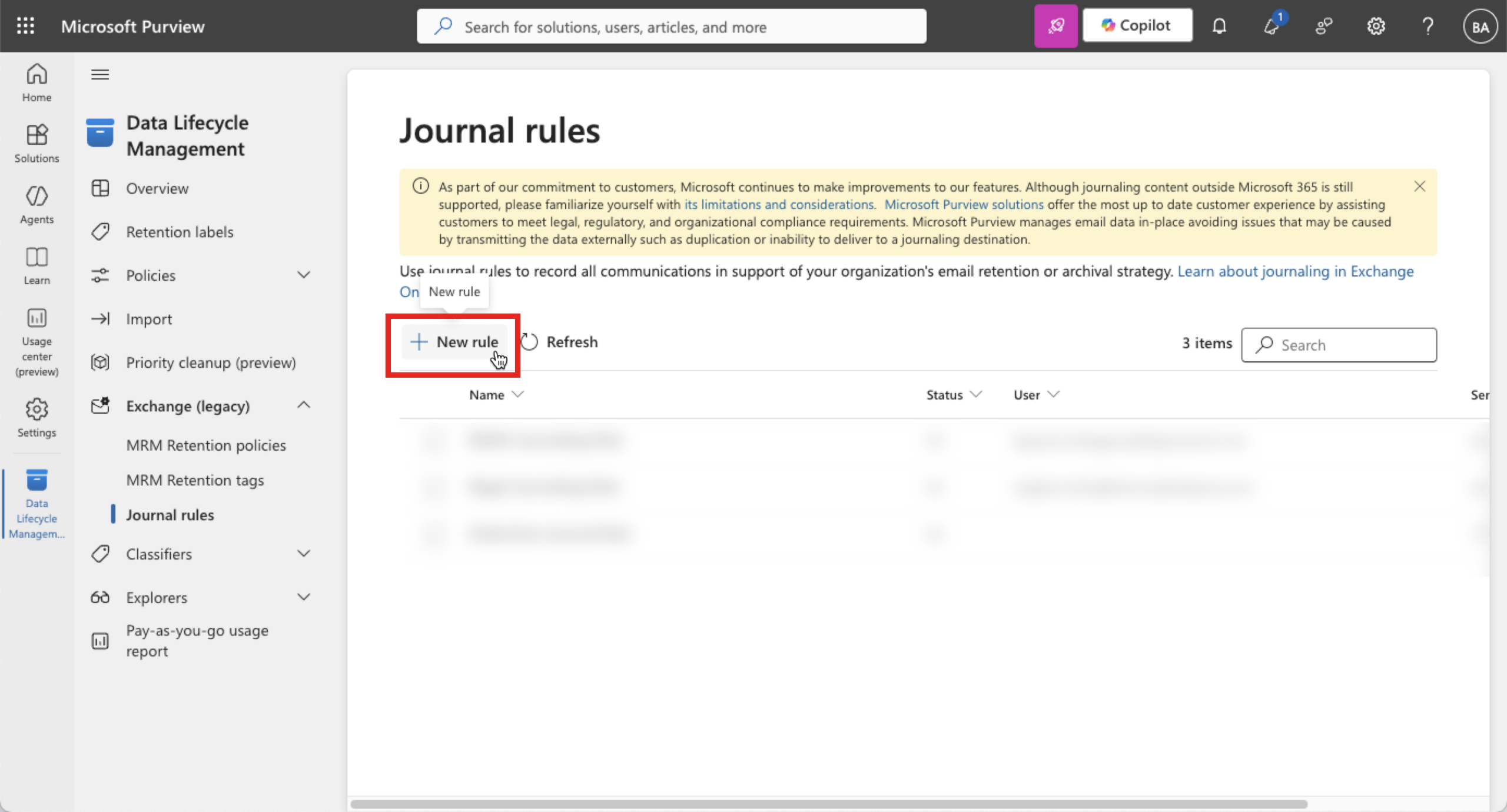
- Send journal reports to: 177faf96fc23c292dc53176b4de2c264@74300.journal.archive.zixcentral.com
- Journal rule name: BGAN ZixArchive Journal Rule
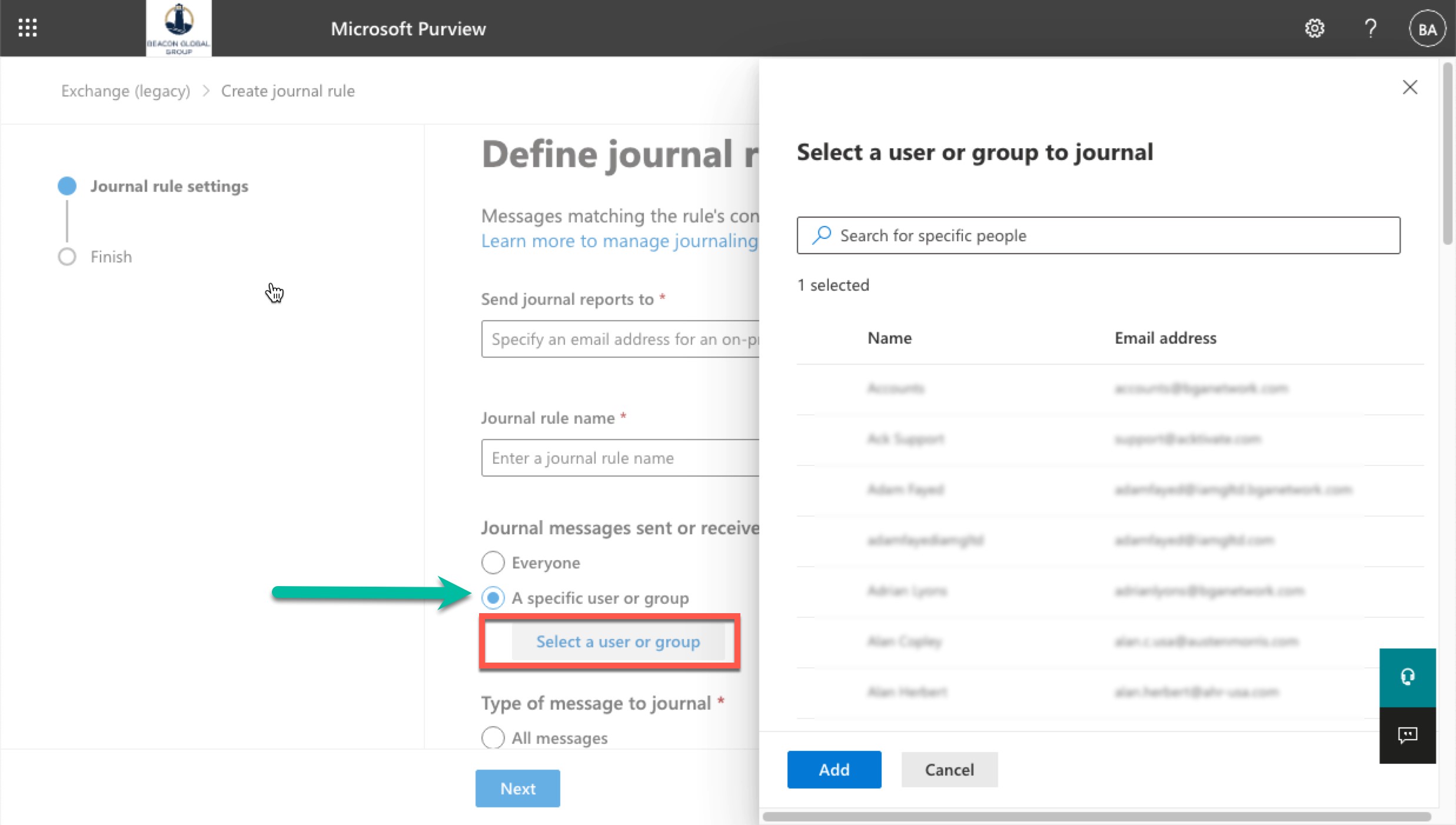
- See below if you want to select A specific user or group, otherwise select Everyone
- If a group, see the section below on Creating a Group
- Select All messages
- Click Next
- Review all the settings to finalize and save

Setting up a Connector
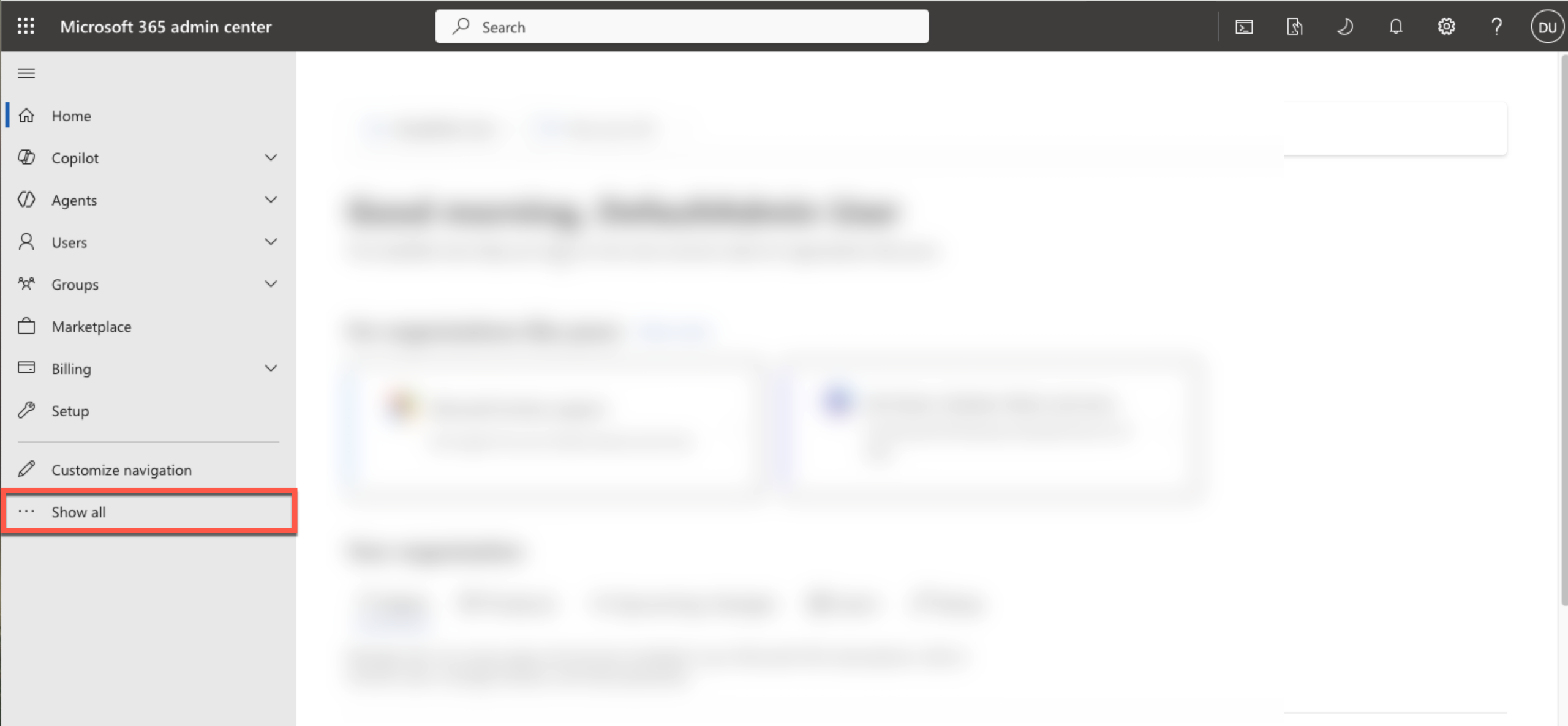
Go to https://admin.cloud.microsoft.com, click Show all, then Exchange

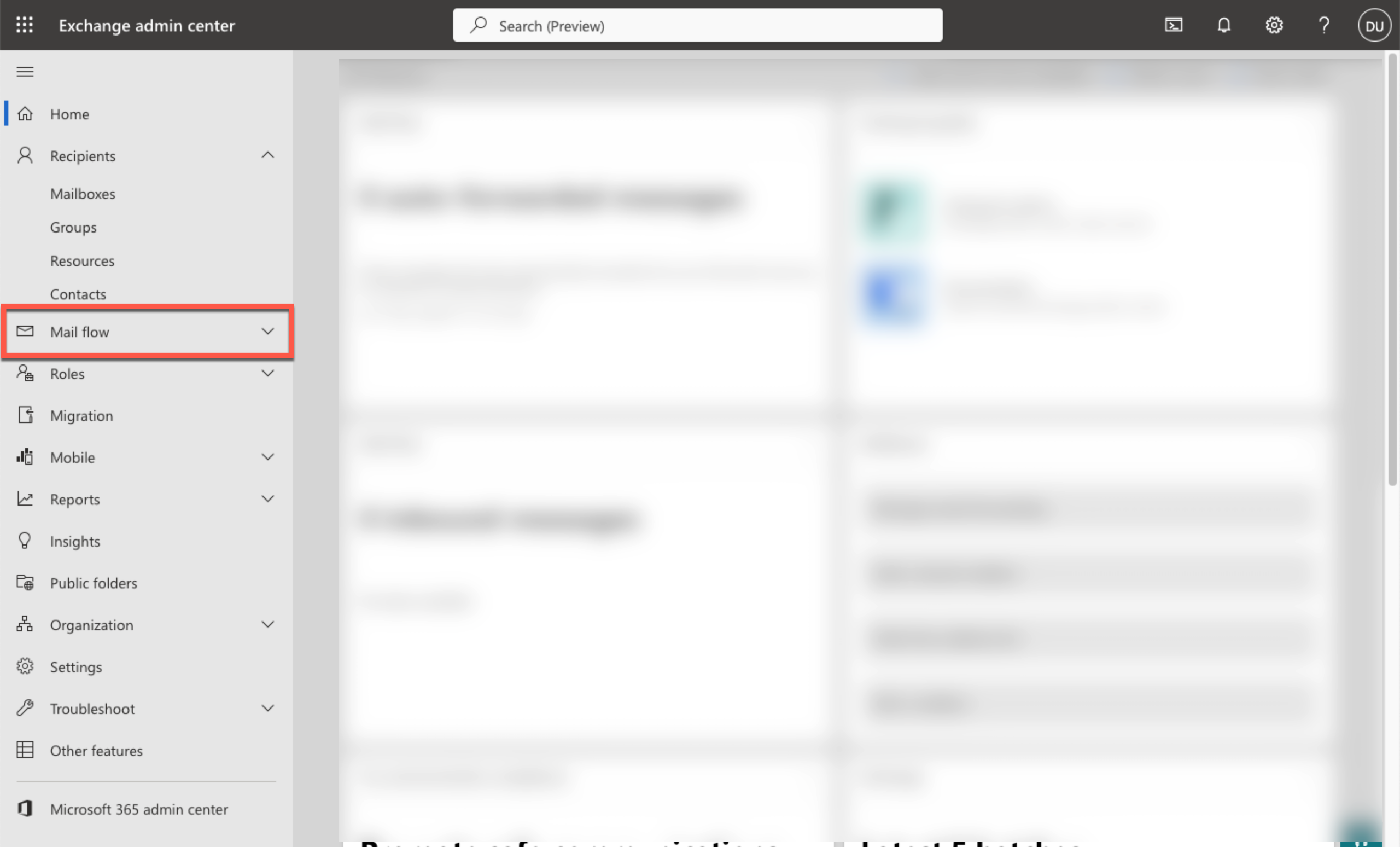
Click Mail flow, then Connectors
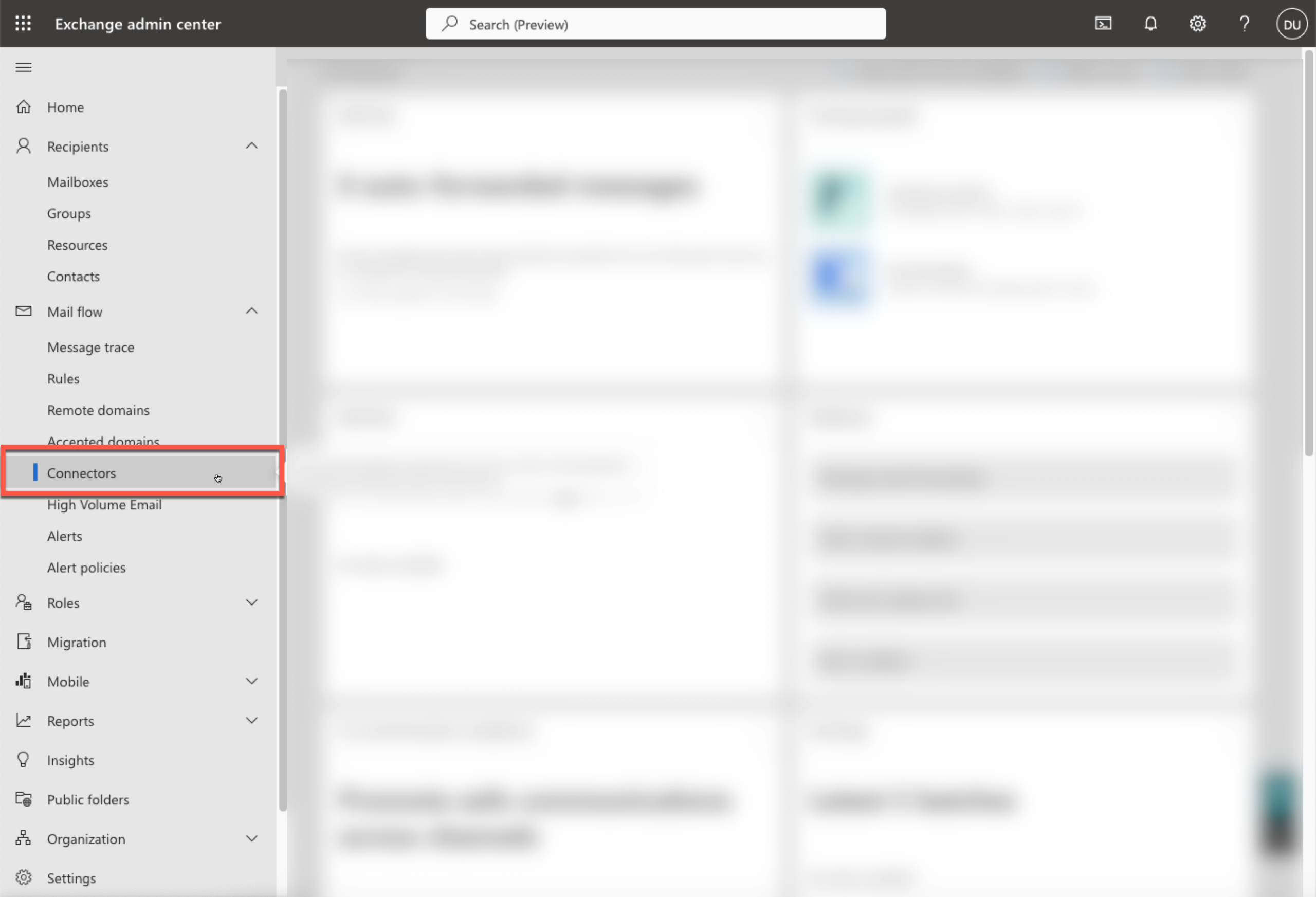
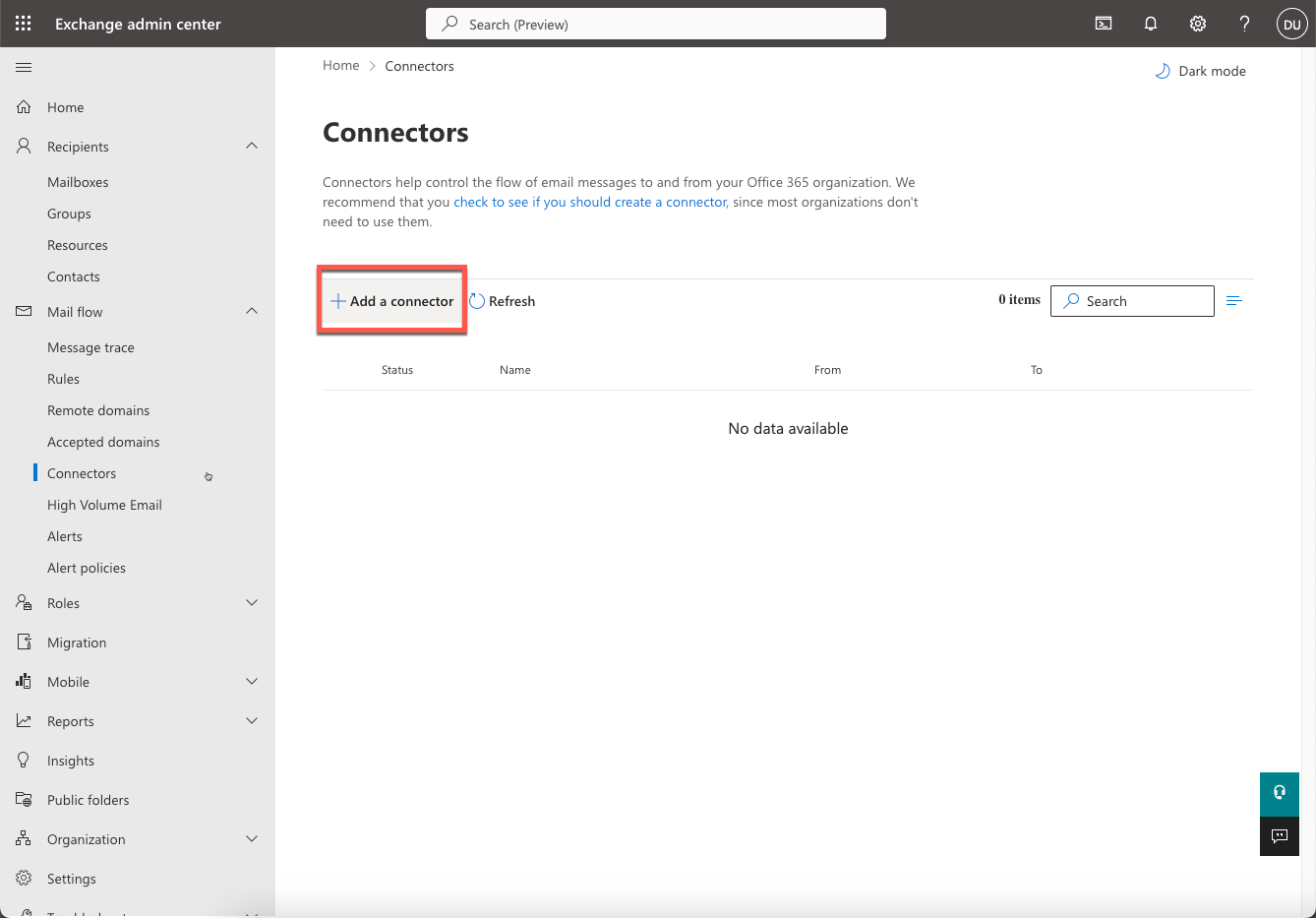
Click + Add a connector
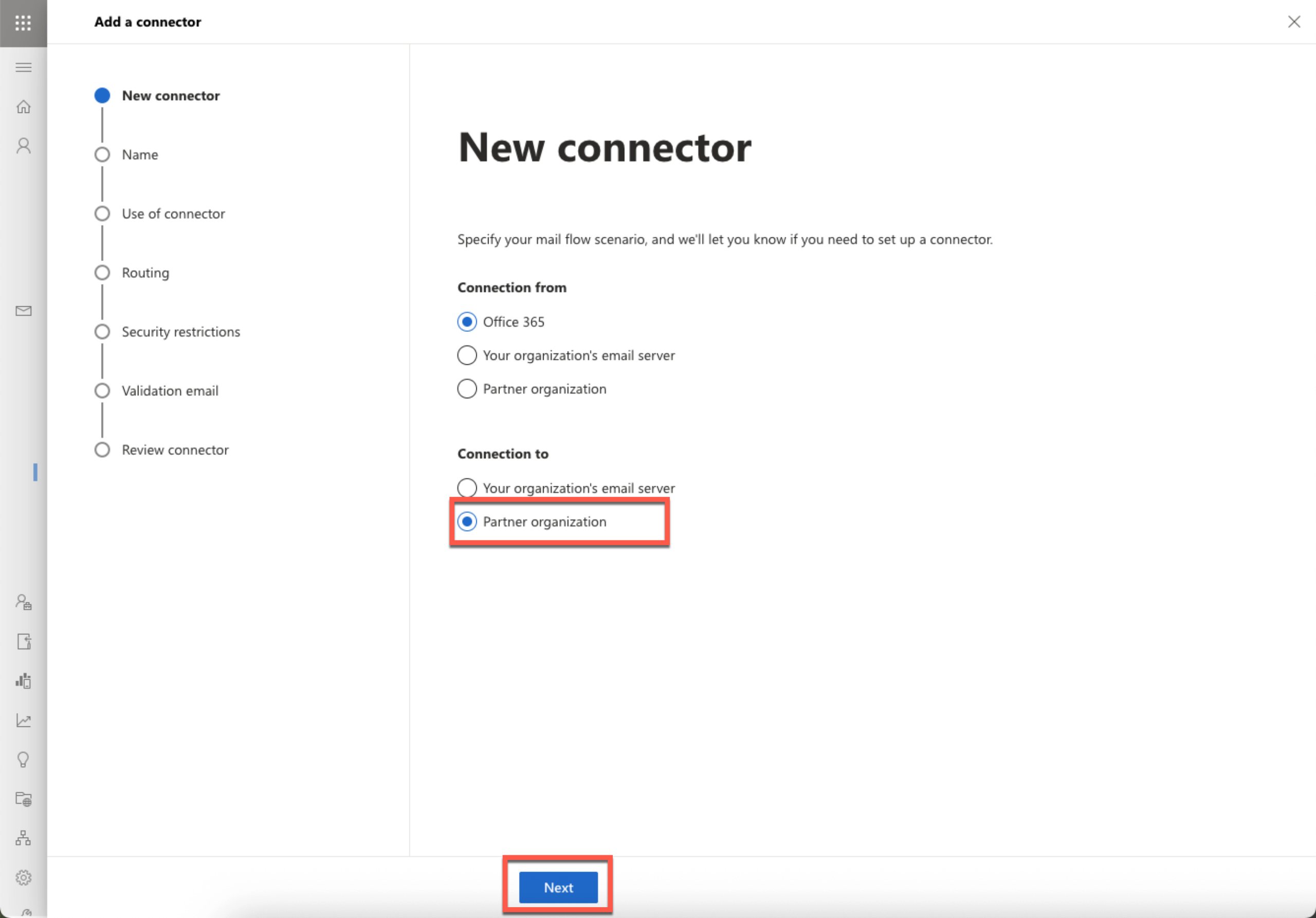
Select Office 365

Select Partner Organization under the Connection to section, then click Next
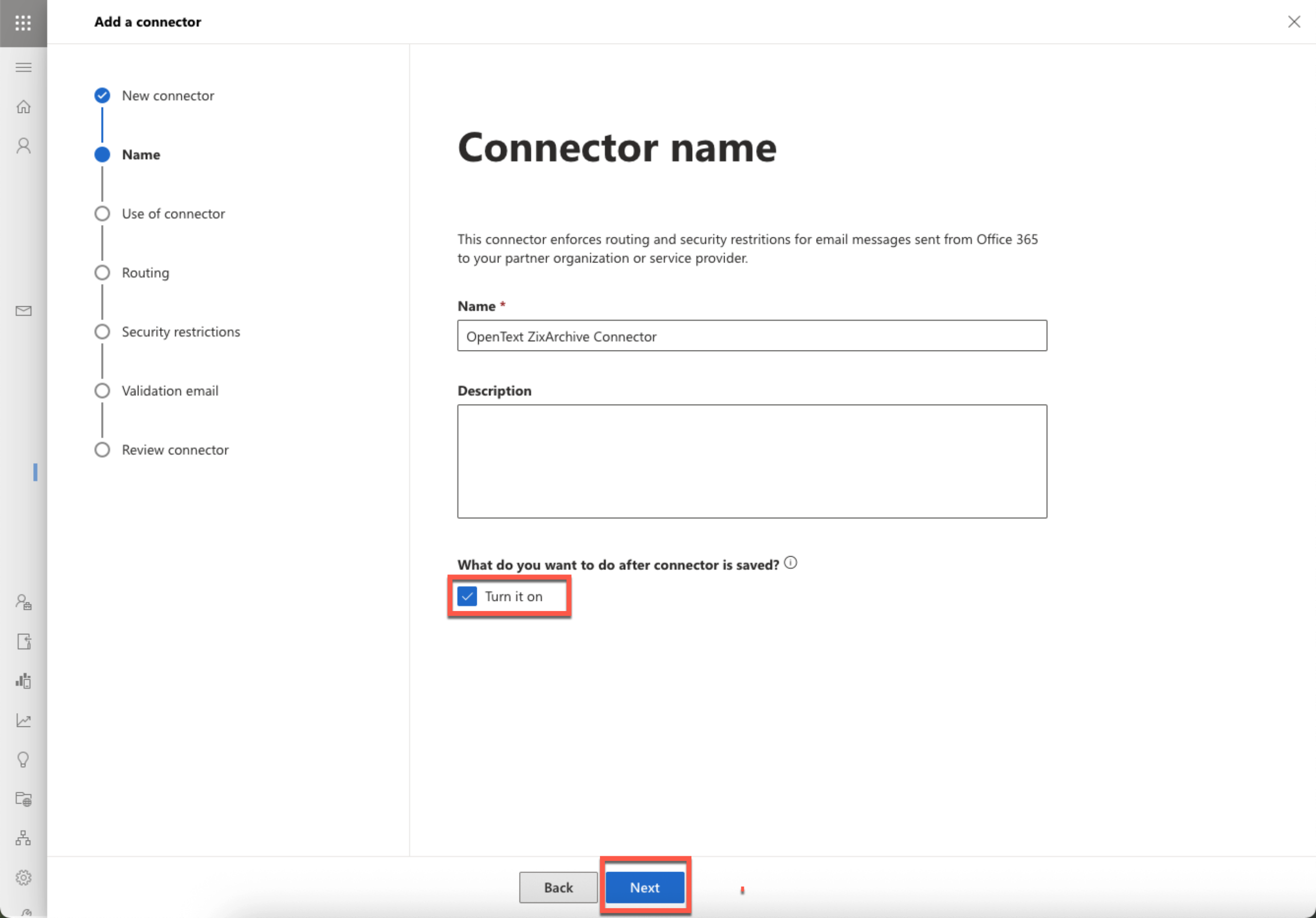
Enter the name OpenText ZixArchive Journaling Connector, turn it on is checked, and click Next
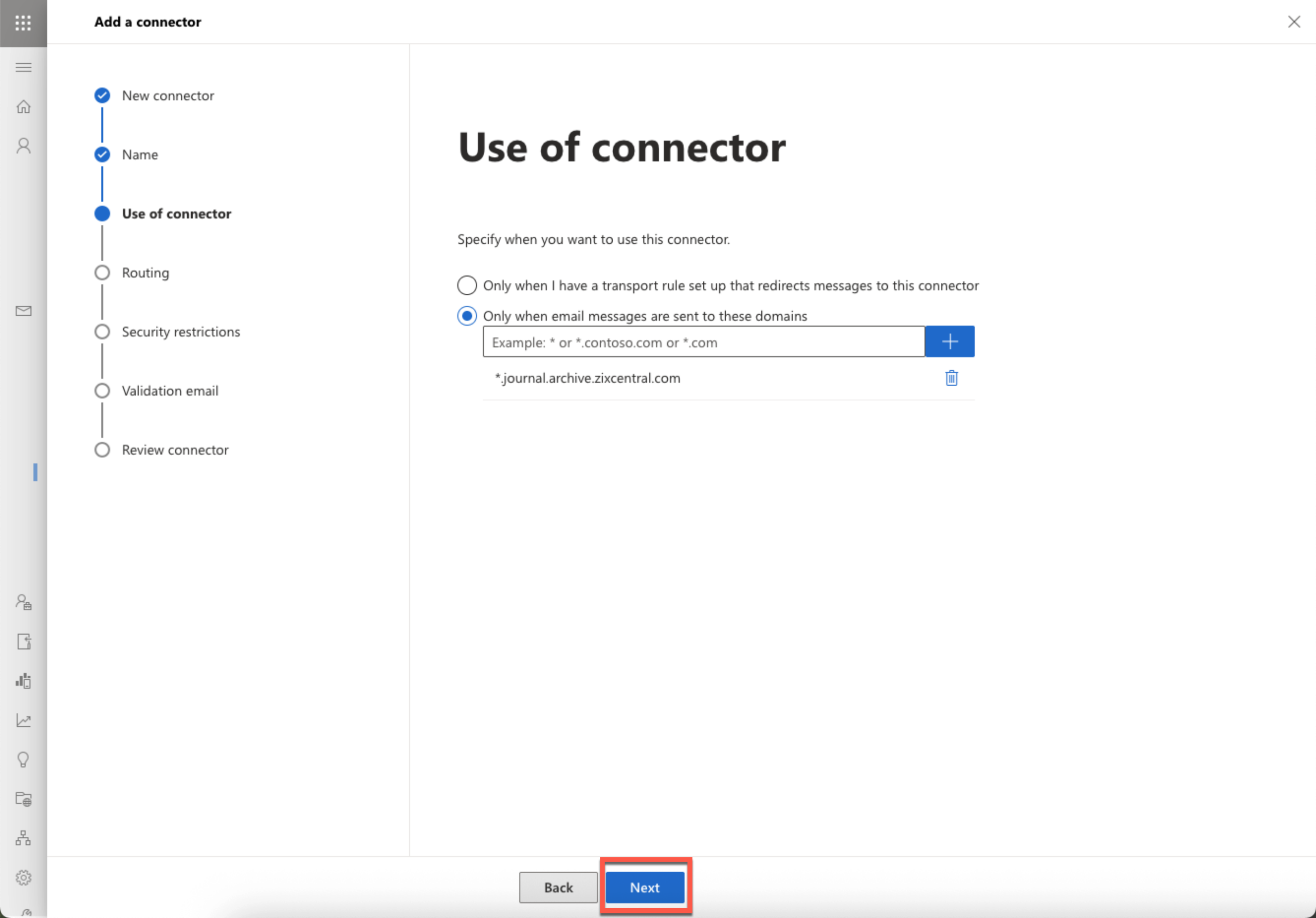
Select Only when email messages are sent to these domains and enter *.journal.archive.zixcentral.com into the field, then click the + sign

Click Next
Select Use the MX record associated with the partner’s domain and click Next
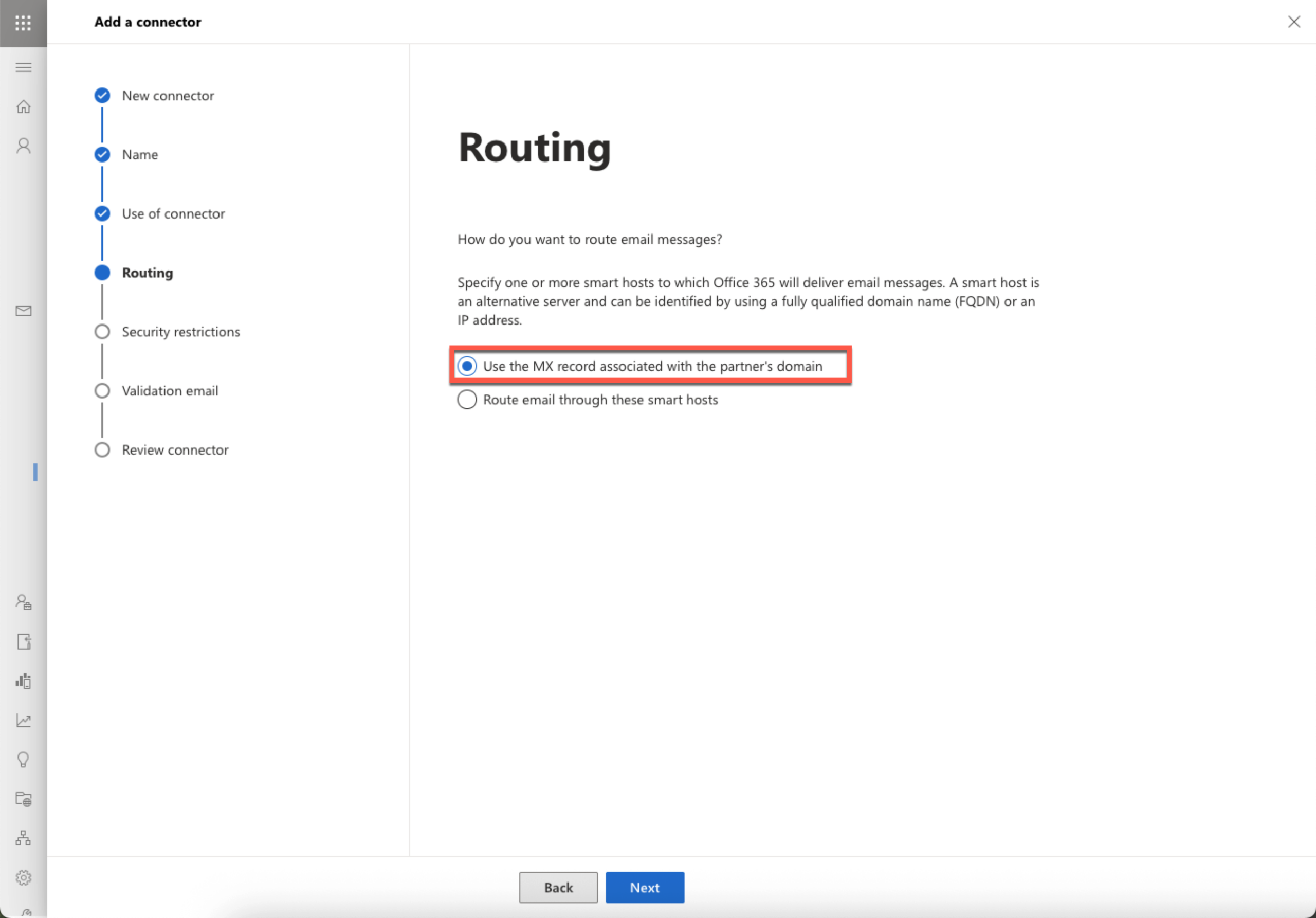
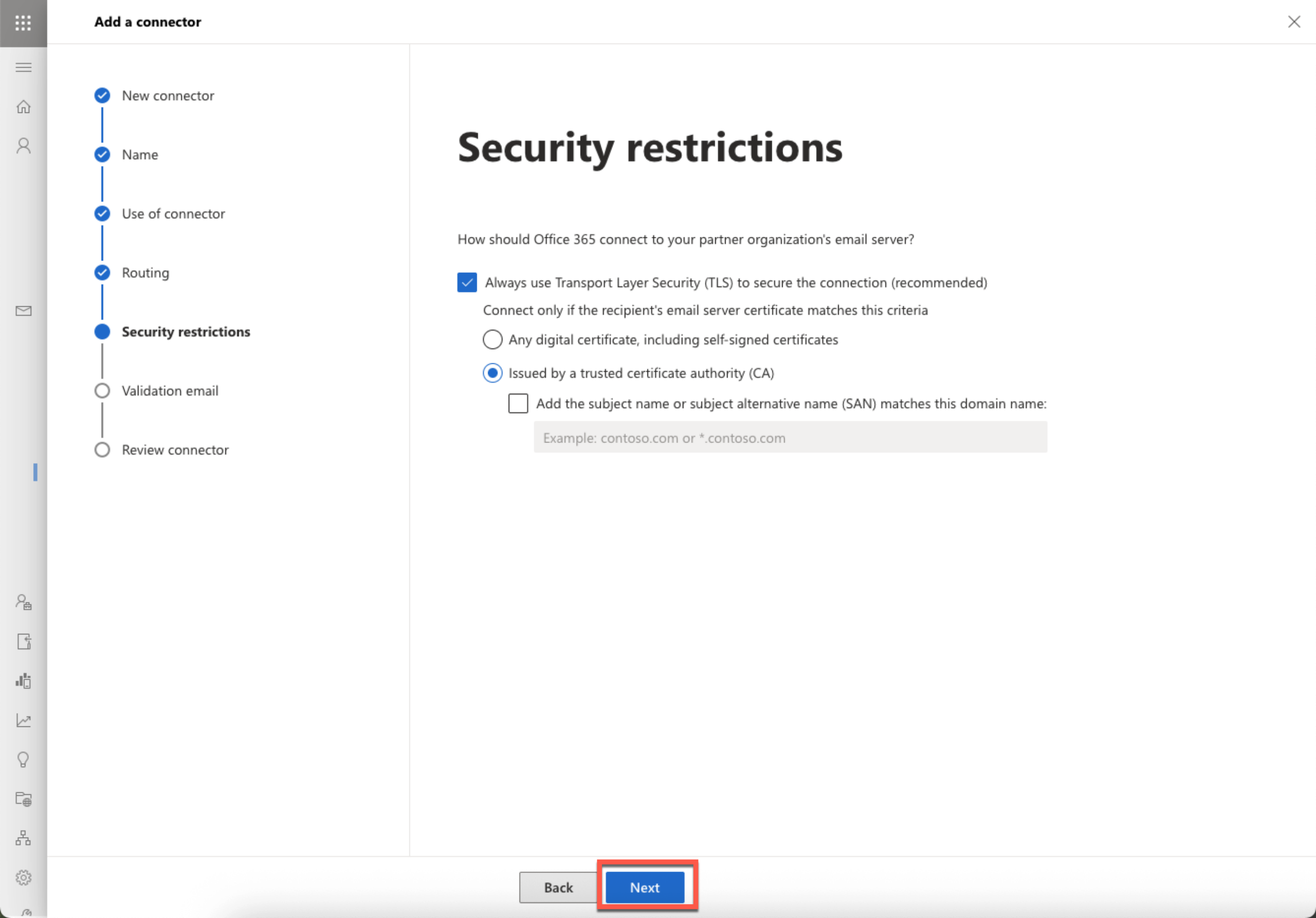
On the Security restrictions page, leave everything as is and click Next
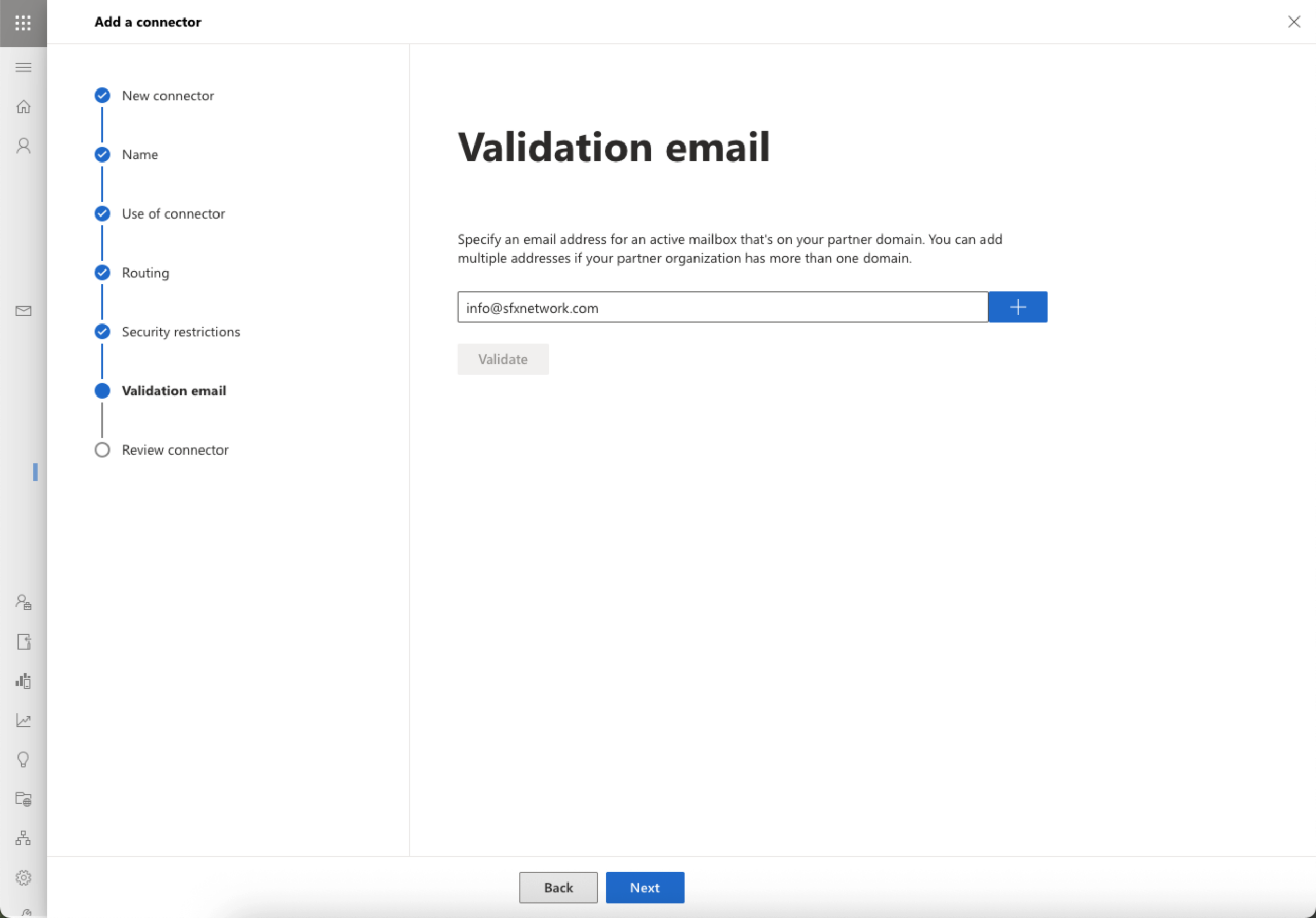
Enter info@sfxnetwork.com into the field and click the + sign, then validate
Creating a Group
Go to https://portal.office.com and click Teams & groups
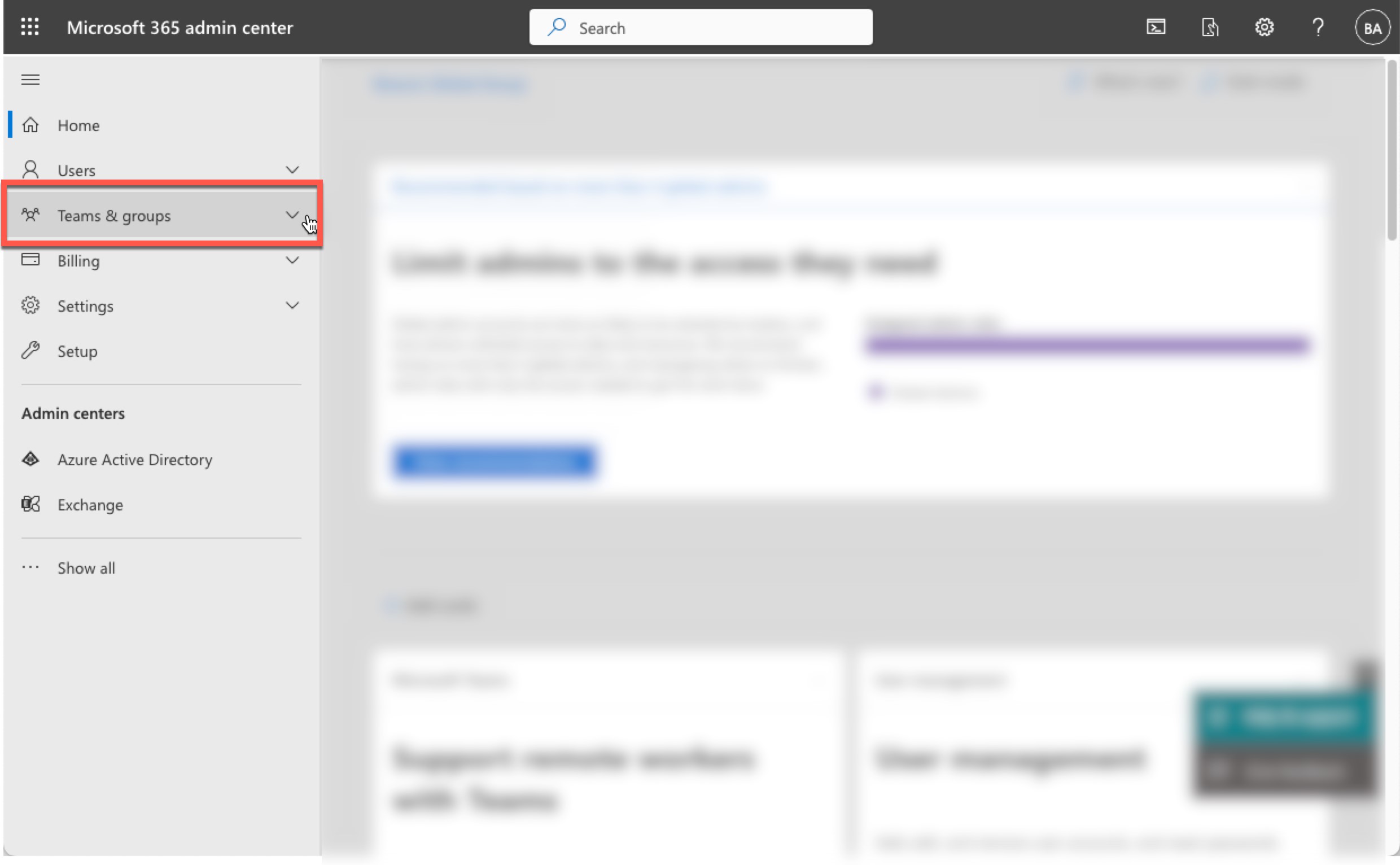
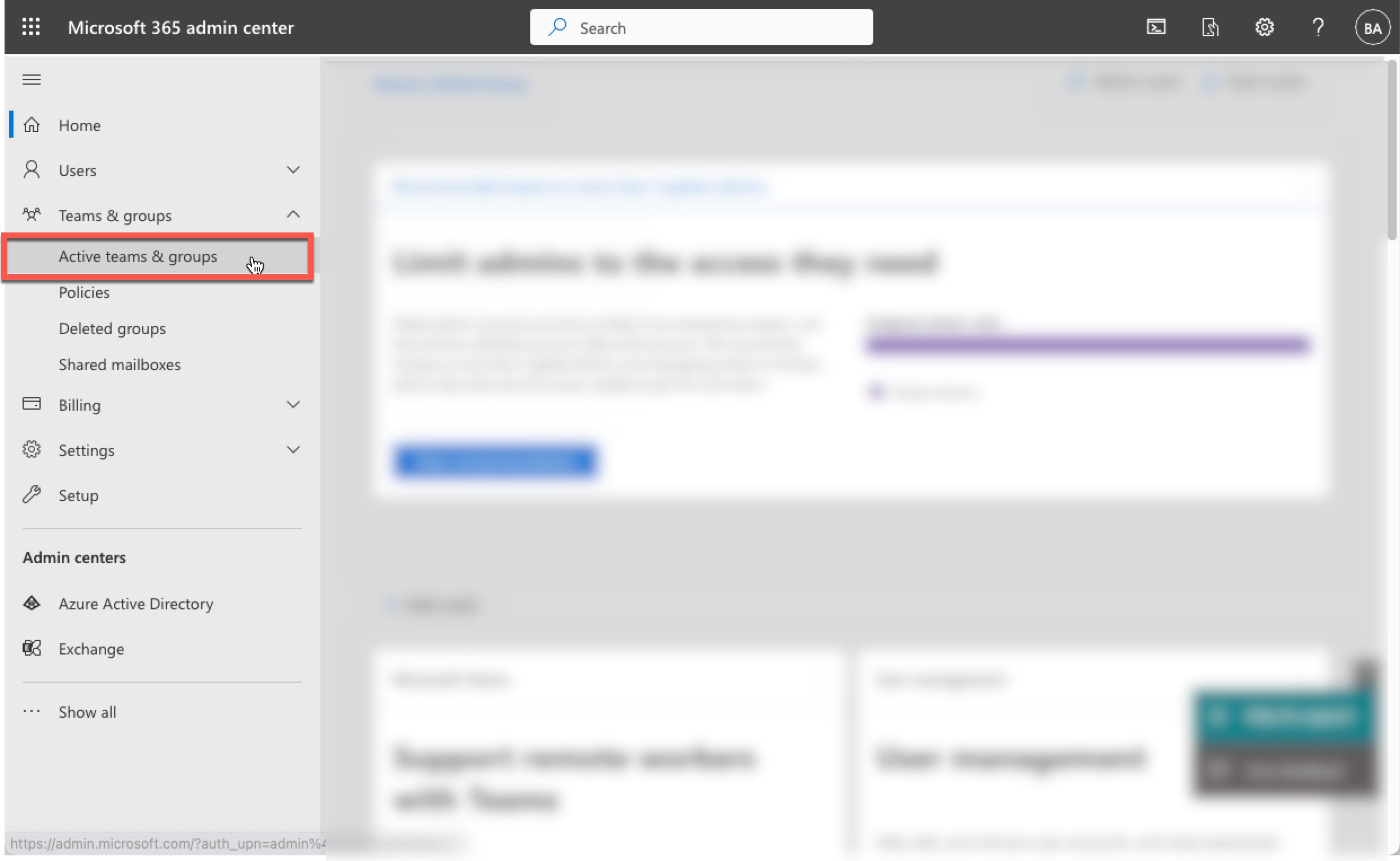
Click Active teams & groups
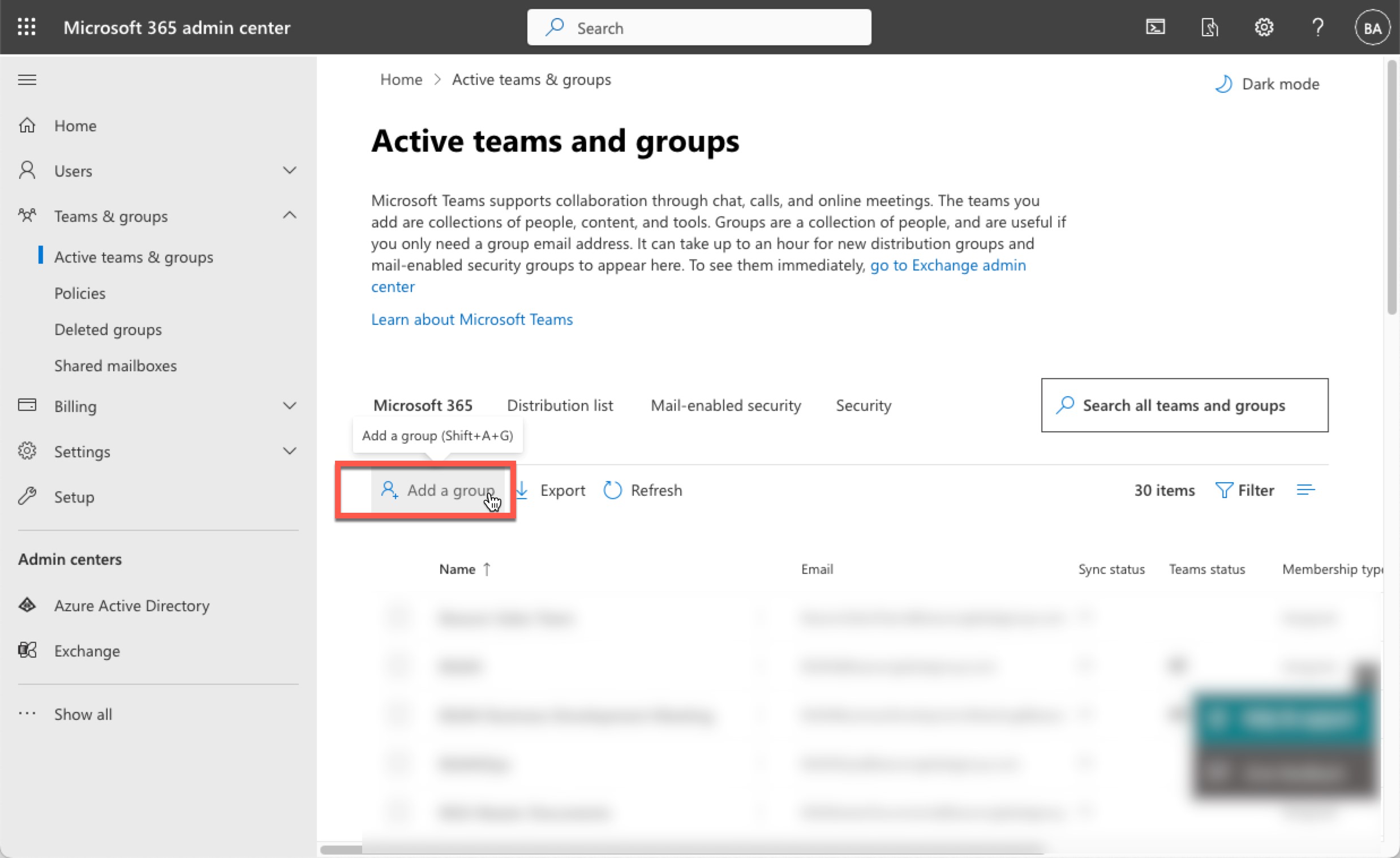
Click Add a group
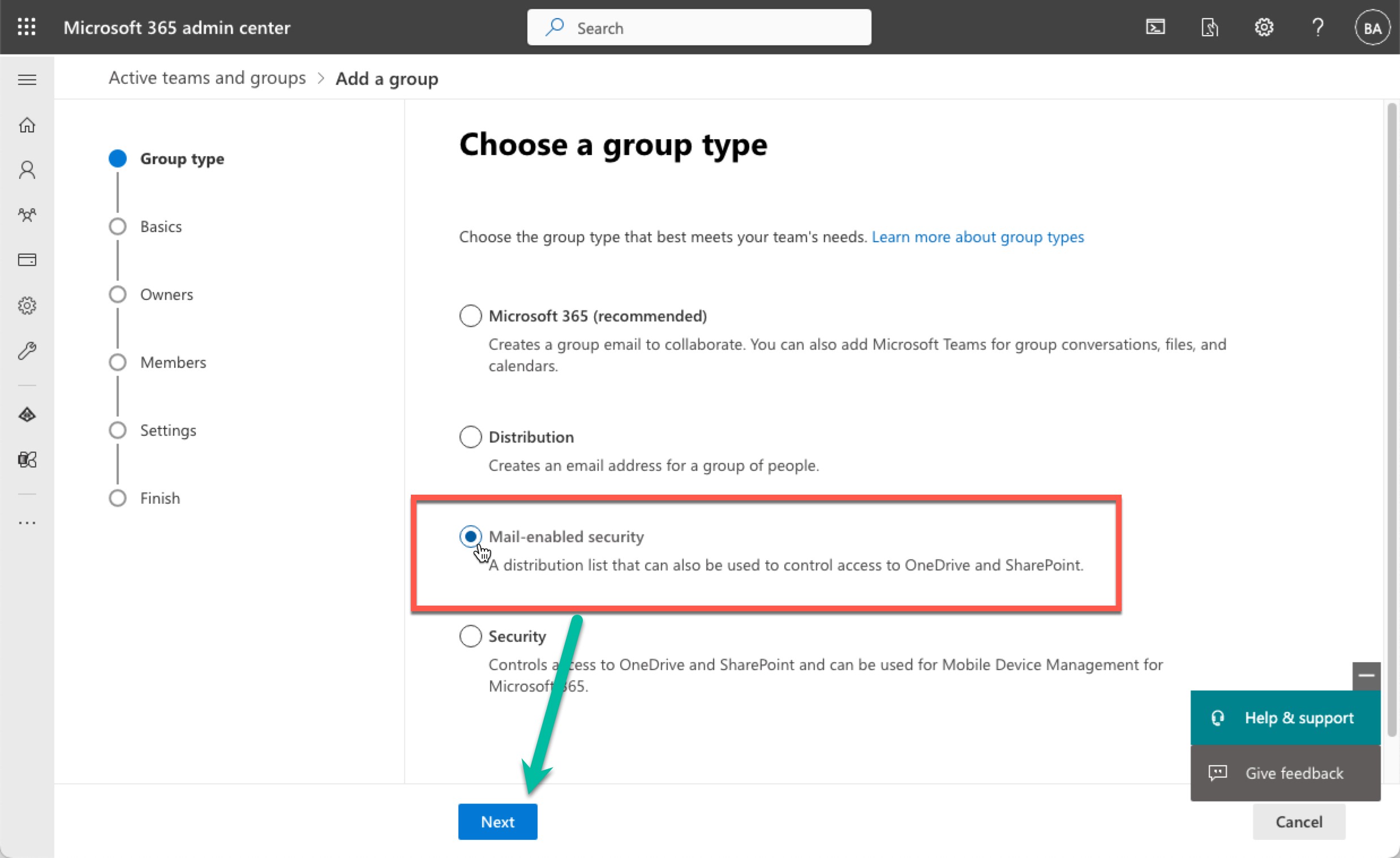
Select Mail-enabled security then click Next
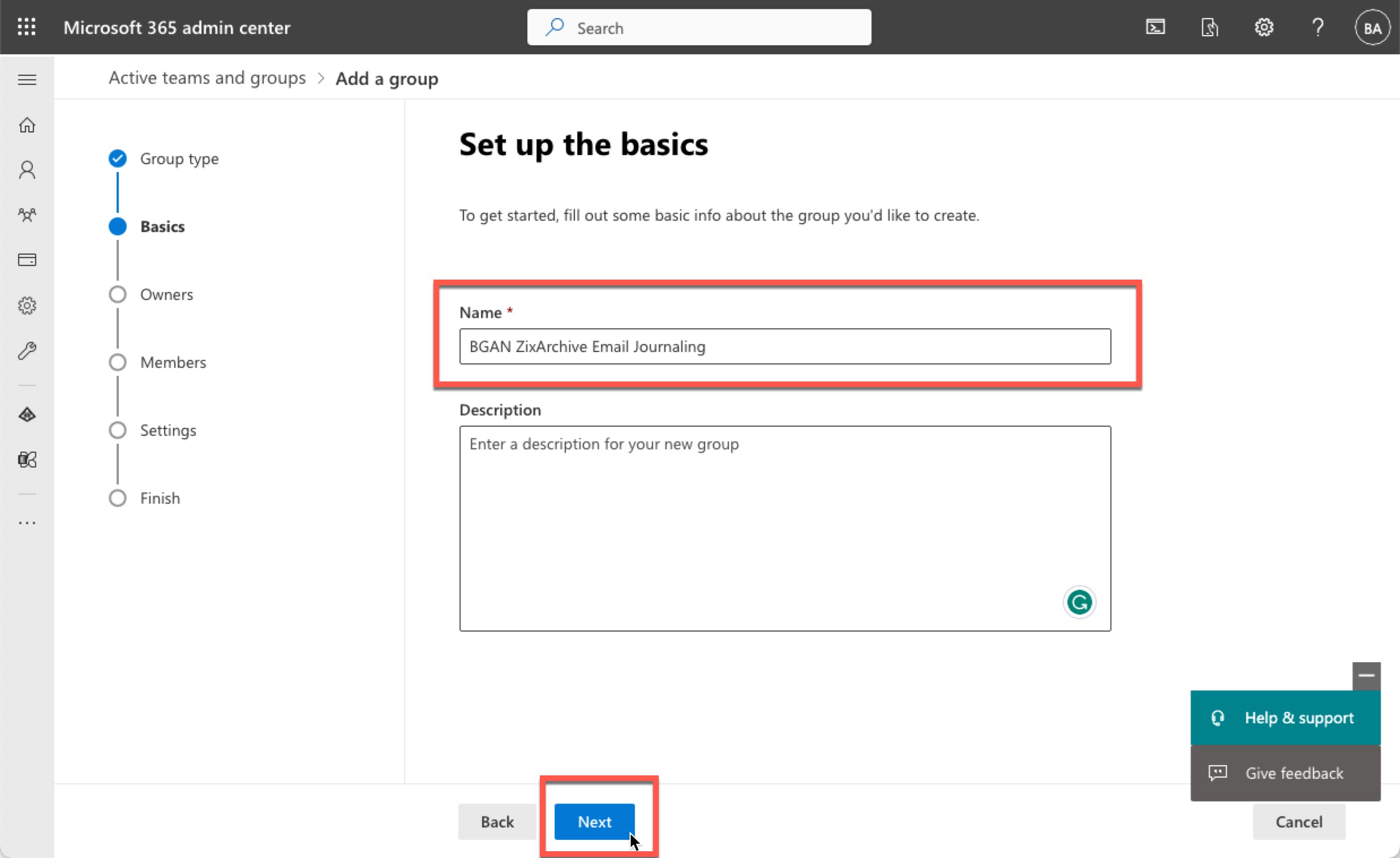
For the Name, enter BGAN ZixArchive Email Journaling then click Next.
Assign Administrator Owners. Once an owner is selected, the Add button will turn blue, then click it to move to the next step.
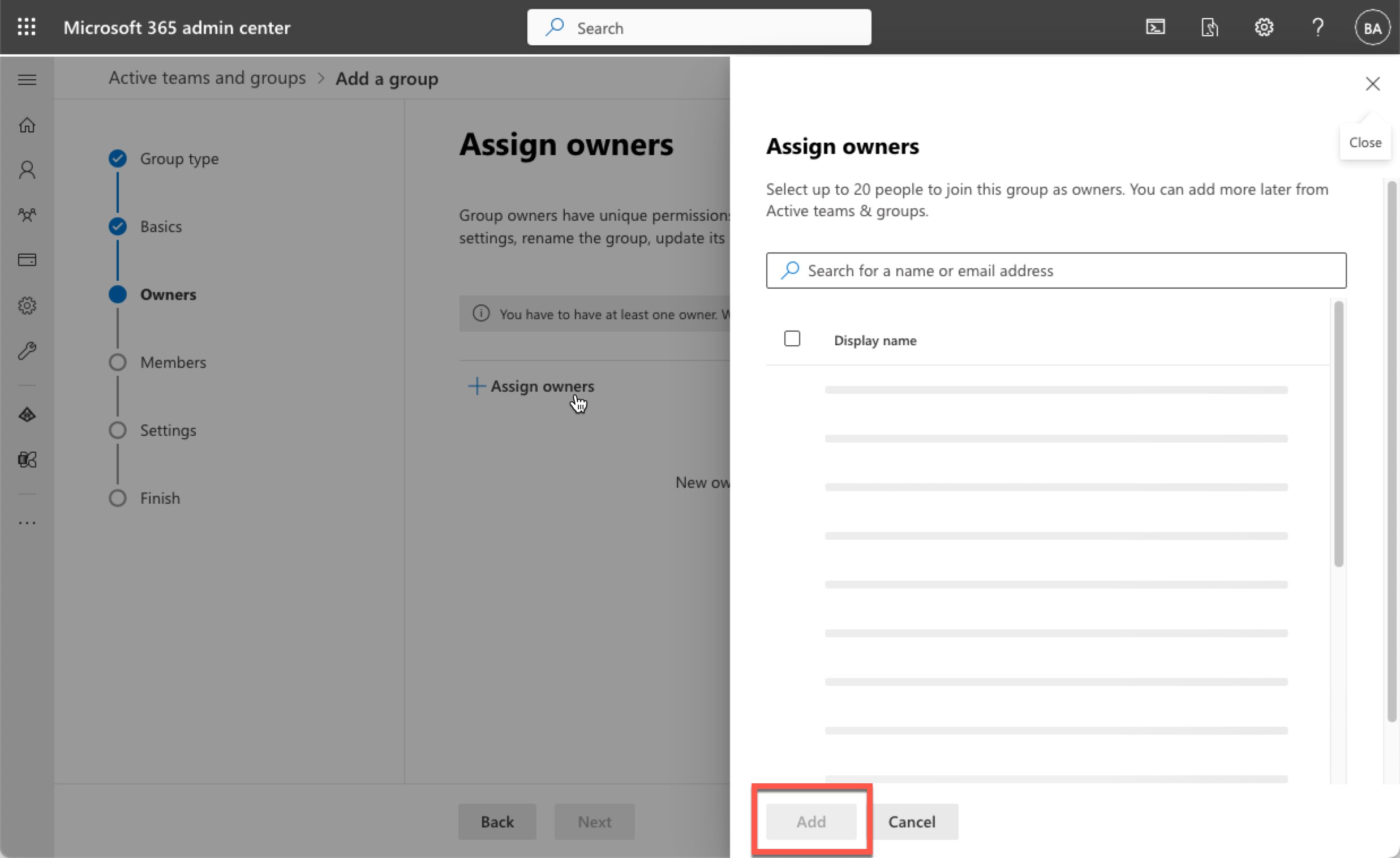
Click Next
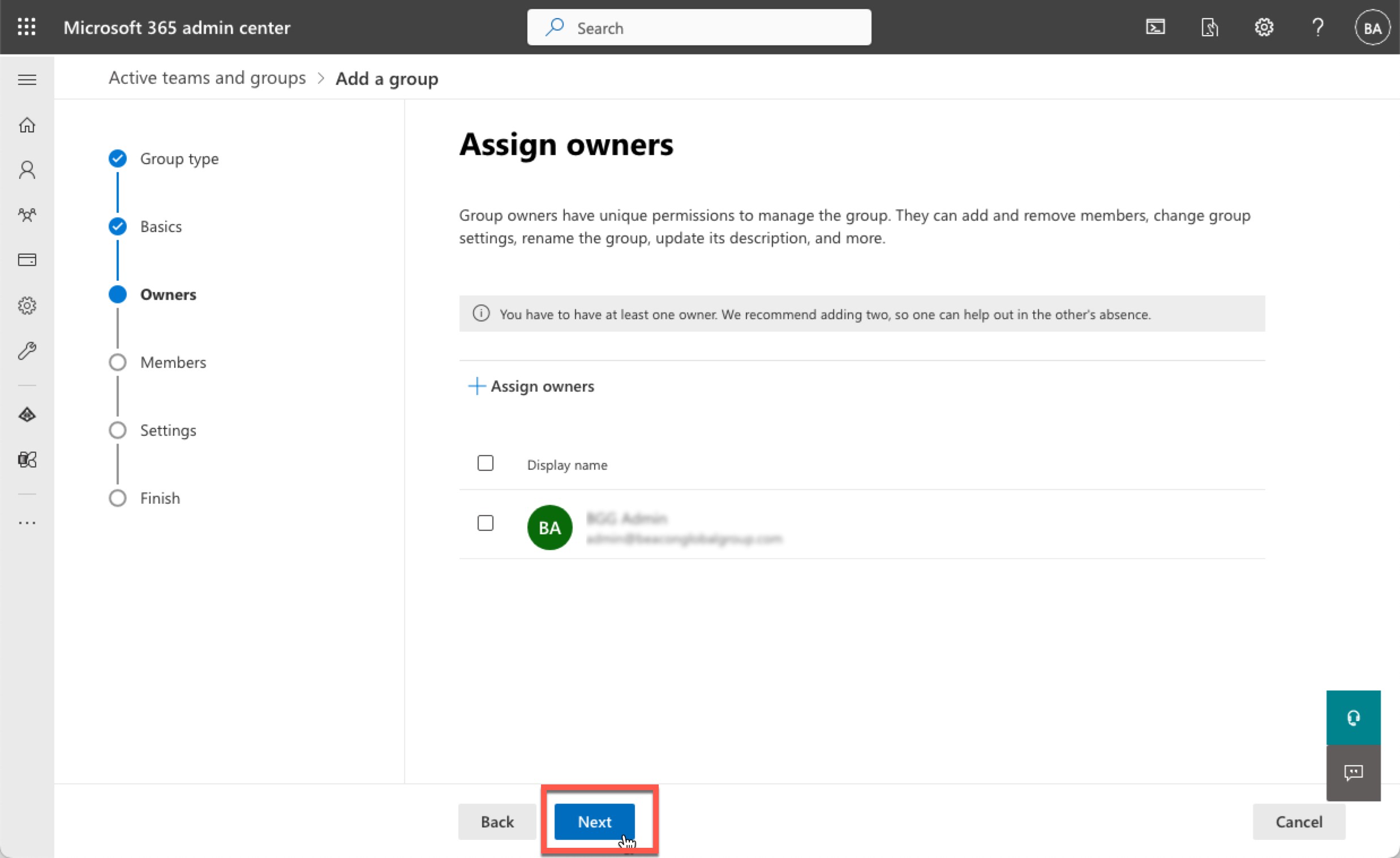
Similar to adding owners, click + Add members
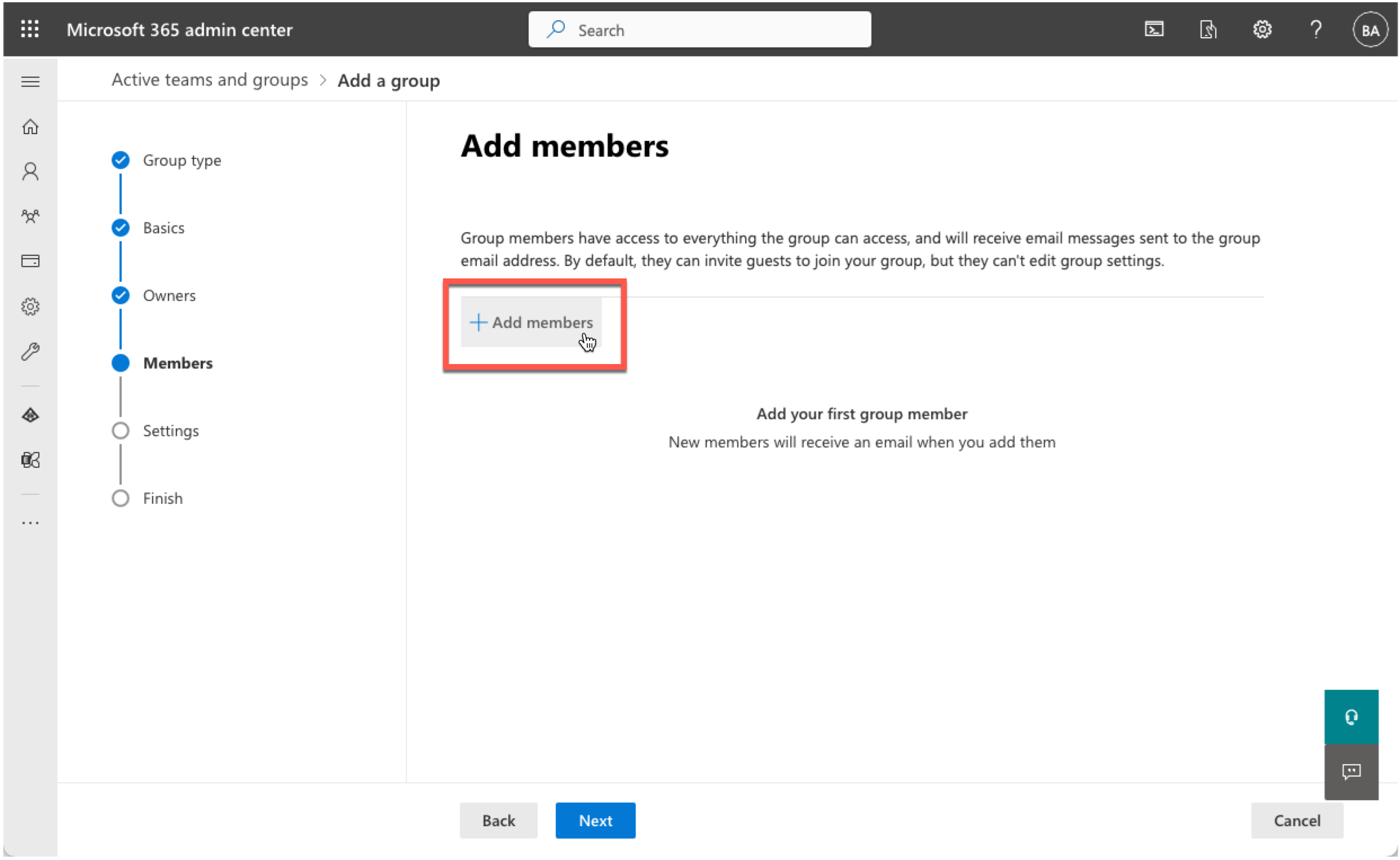
Click Next
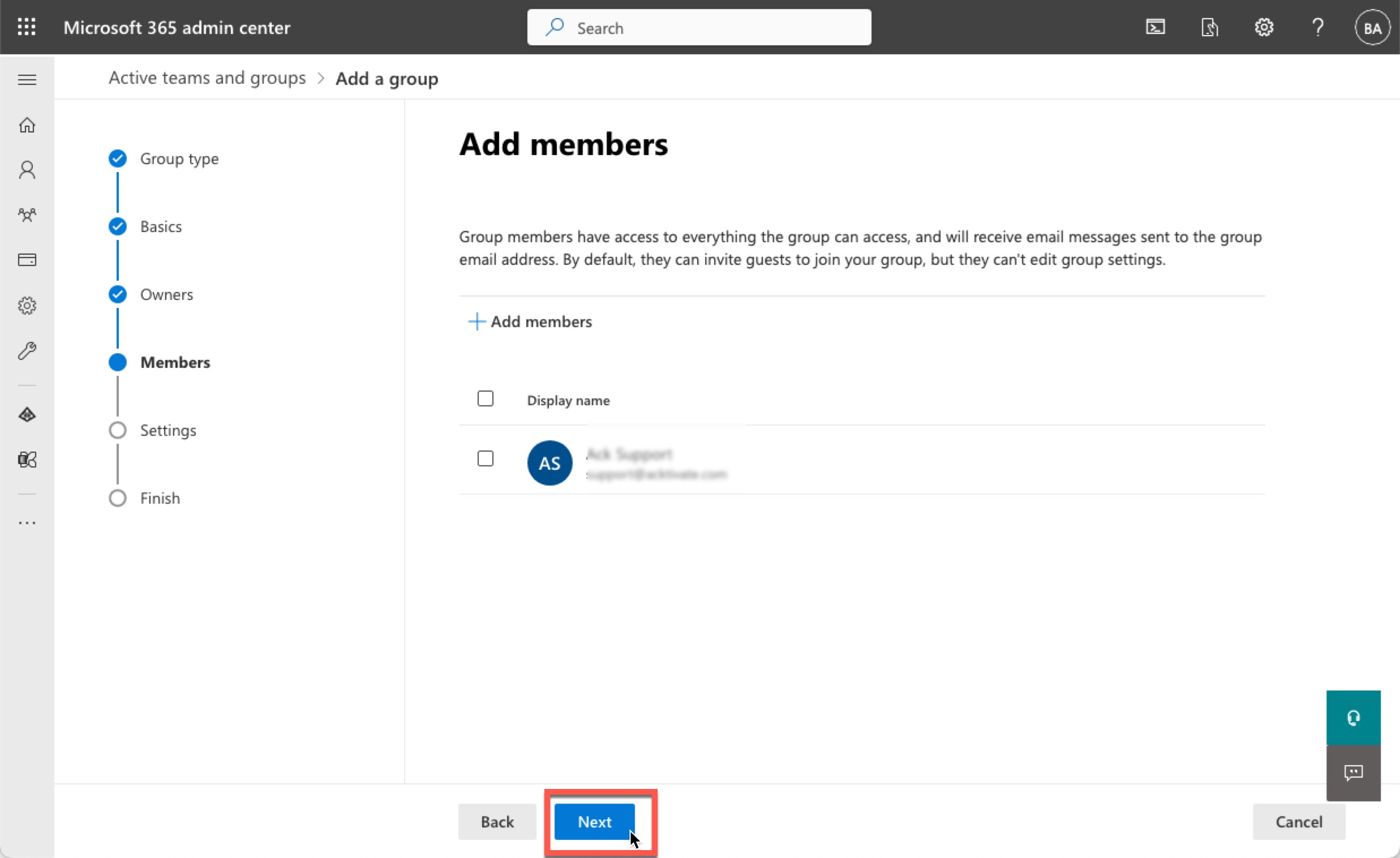
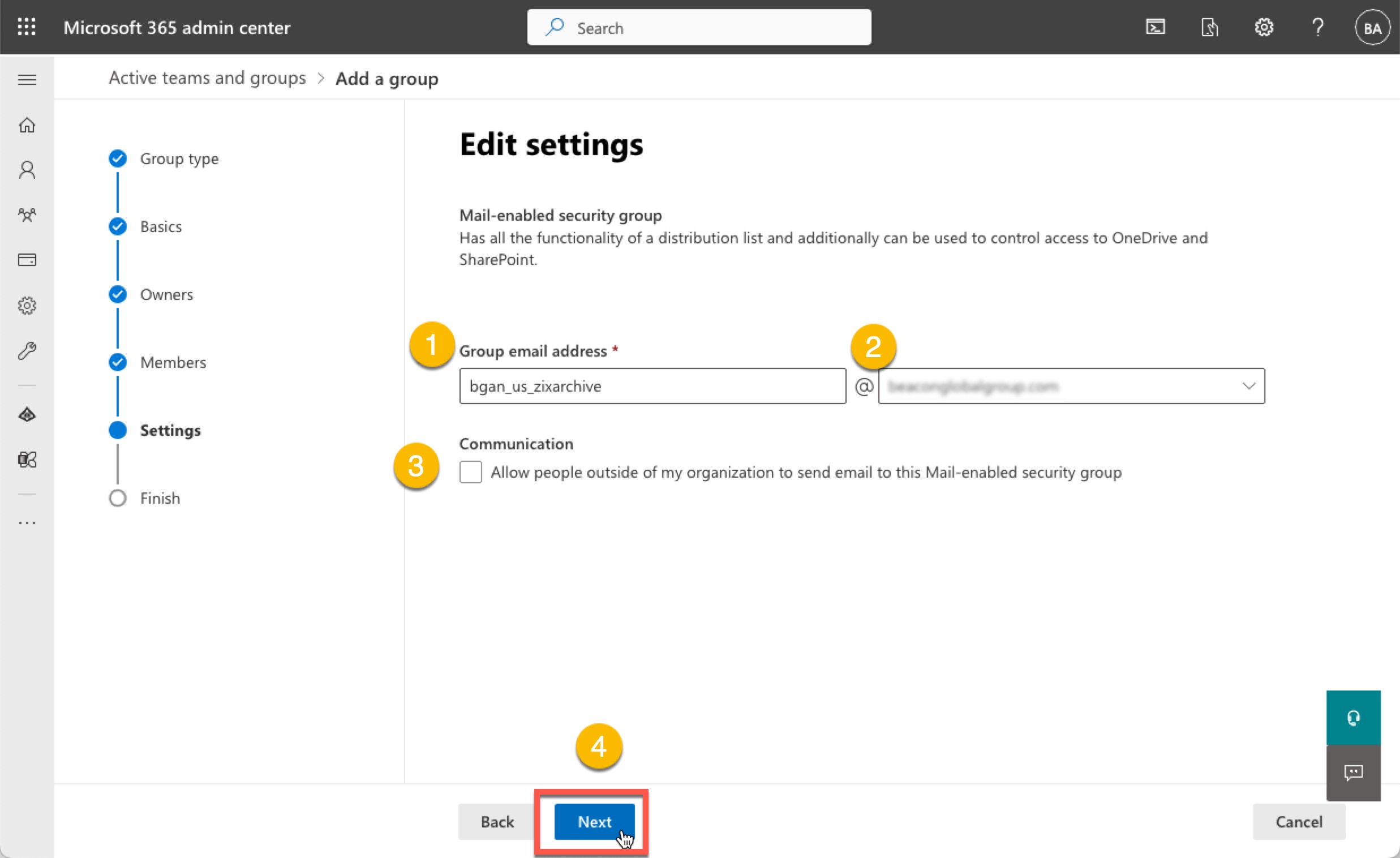
Enter a Group email address name (#1) and select the domain from the dropdown to archive (#2), we recommend not checking Communication (#3) and then click Next (#4.)
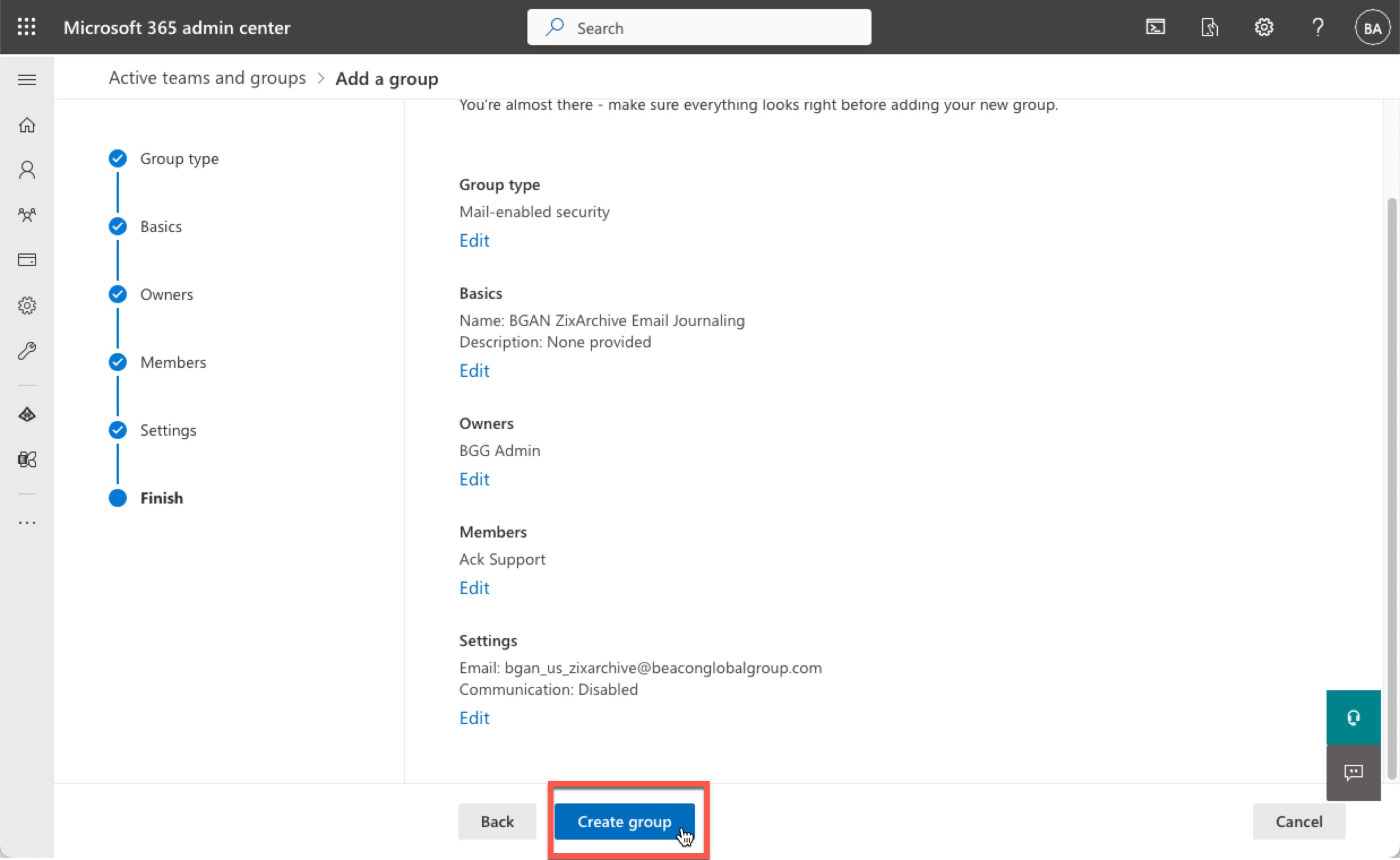
Review the settings, then click Create group
Go back to the Journal rules, then select A specific user or group, then click Select a user or group and select the Group you created earlier.